
If you’ve ever craved that perfect balance of sweet, tangy, spicy, and savory flavors you get from restaurant Pad Thai but wanted a fully plant-based version you could whip up at home, this Vegan Pad Thai is for you. It’s bright, saucy, and packed with loads of flavor without any meat or animal products.
And if you’re craving more plant-based versions of classic takeout dishes, make sure to check out my Creamy Vegan Ramen, Vegan Pho, and Rice Paper Dumplings.
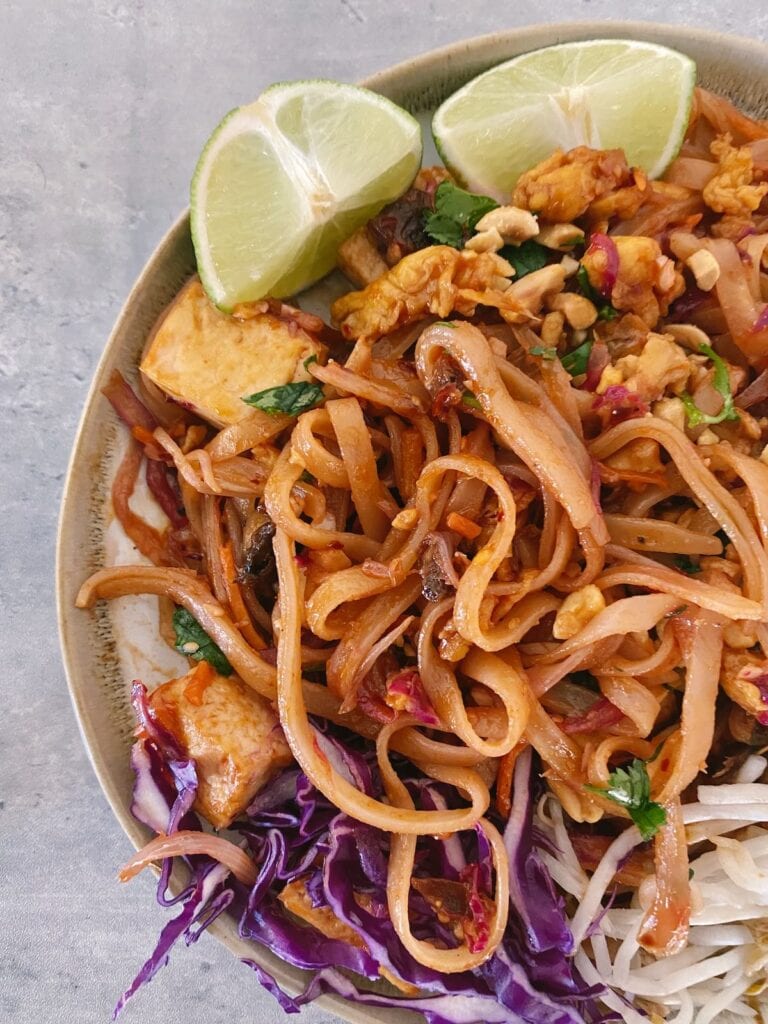
Table of contents
Key Ingredients for Vegan Pad Thai
- Tamarind: The signature ingredient in Pad Thai that gives it its tangy, slightly fruity flavor. It replaces fish sauce in vegan versions and provides acidity and depth.
- Soy sauce: Provides saltiness and umami, helping balance the sweetness from the maple syrup while replacing traditional fish sauce.
- Maple syrup: Used instead of palm sugar. It gives a caramel-like sweetness that balances the tang from lime and tamarind and helps the sauce cling to the noodles.
- Sriracha + chili flakes: These add heat and brightness, making the sauce spicy, flavorful, and vibrant. Thai chili flakes are best but regular chili flakes work in a pinch!
- Shallot + garlic: These aromatics build the foundation of savory flavor when sautéed. Shallots add sweetness, garlic adds sharpness — essential for takeout-style Pad Thai.
- Vegan eggs (Just Egg): They scramble beautifully and add richness and texture, making the Pad Thai feel traditional while staying 100% vegan.
The full written recipe with measurements is below on the recipe card.
Step-By-Step Instructions
- Soak tamarind in hot water until softened.
- Mix soy sauce, lime juice, softened tamarind, maple syrup, sriracha, and chili flakes to make the sauce.
- Cook rice noodles according to package instructions.
- Sauté shallot and garlic in oil, then add tofu and veggies.
- Push veggies to one side and scramble vegan eggs on the other.
- Add noodles and sauce and stir-fry until coated.
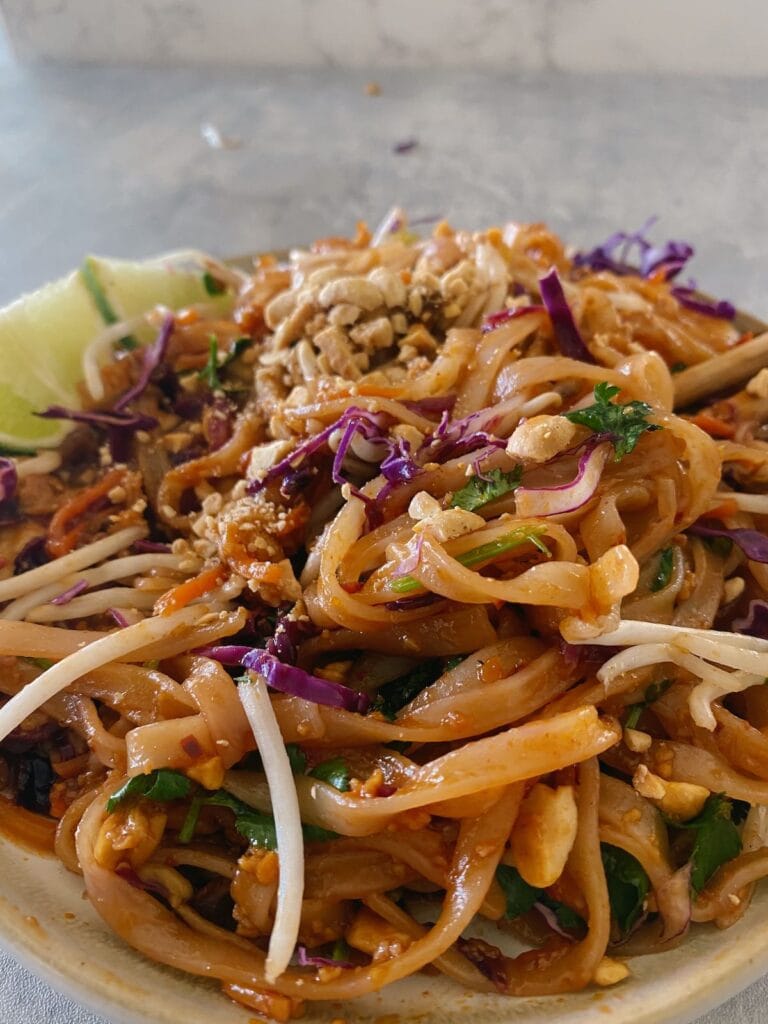
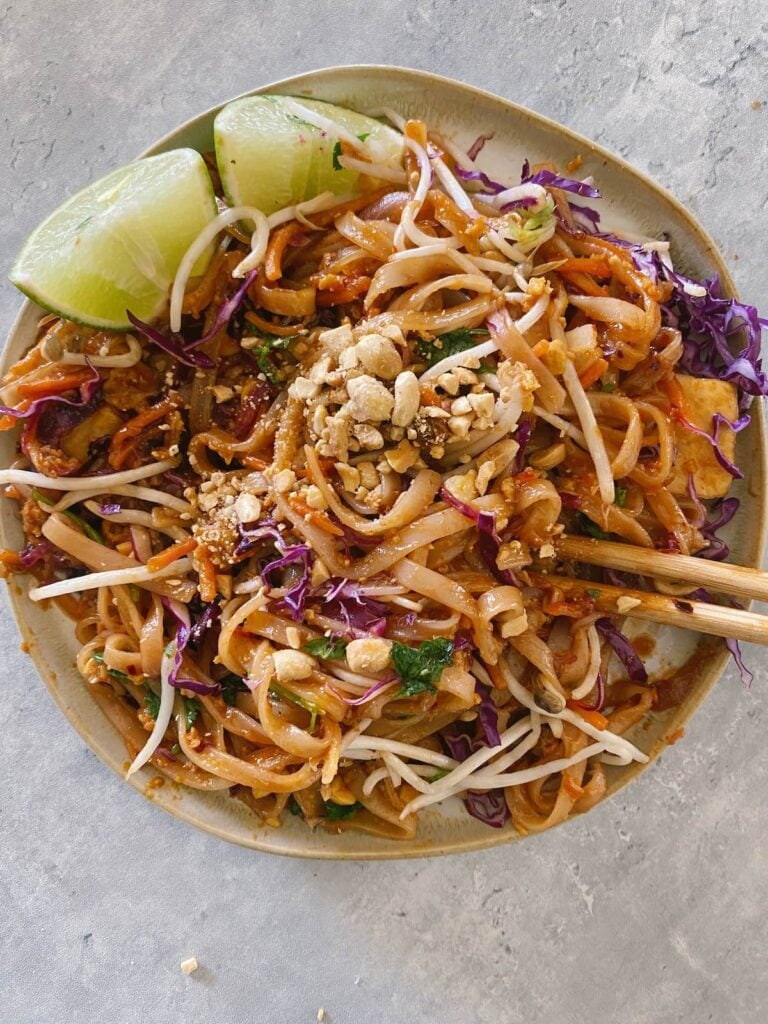
- Top with peanuts, cilantro, bean sprouts, and extra cabbage.
My Expert Tips For Vegan Pad Thai
Use fresh tamarind: It gives the most authentic tang and depth, but bottled tamarind paste works in a pinch.
Don’t overcook the noodles: Rice noodles turn mushy fast. Cook until just tender, then rinse with cool water to stop the cooking.
High heat is key: This helps keeps the veggies crisp and gives your Pad Thai that restaurant-style flavor.
Serving Suggestions
Vegan Pad Thai is perfect on its own, but you can easily build a full meal around it. Serve it with crispy spring rolls, miso soup, or a korean marinated eggs for balance. If you’re looking for something more light and refreshing, I recommend serving it with tofu fresh rolls or a smashed cucumber salad!
If you love toppings, add extra peanuts, lime wedges, scallions, basil, or chili crisp for even more texture and flavor.
FAQ
Yes—use extra lime juice and a splash of rice vinegar, though it won’t be quite as authentic.
What vegetables work best in vegan Pad Thai?
Overcooking is the most common reason. Rice noodles cook fast, so check them early, rinse them right away, and toss them with a little oil to prevent sticking. They soften again when added to the pan, so it’s better to slightly undercook them.
Please remember to leave a review if you make this recipe! The feedback helps me to become a better cook and develop amazing recipes for you.
Vegan Pad Thai
Ingredients
Vegan Pad Thai Sauce
- 1 tsp lime juice
- 1 tsp tamarind
- 2 tbsp hot water
- 3 tbsp soy sauce
- 3 tbsp maple syrup
- 1 tsp thai red chili flakes, or to taste
- 2 tbsp sriracha
Other Ingredients
- 6 ounces rice noodles
- 1.5 tbsp canola oil
- 1/2 shallot
- 2 tbsp chopped garlic
- 6 ounces extra firm tofu, baked or air fried
- 1/3 c vegan eggs, I use the "Just Egg" brand
- 1/4 c bean sprouts
- 1/4 c carrots, optional
- 1/4 c purple cabbage, optional
Garnish
- 1 tbsp peanuts
- cilantro, to taste
- bean sprouts, for serving
Instructions
- Prepare the sauce: In a bowl, mix soy sauce, lime juice, softened tamarind and water, maple syrup, sriracha, and chili flakes. Adjust sweetness or spice as desired.
- Cook the noodles: Cook the rice noodles according to the package, either by soaking or boiling. Drain and set aside.
- Sauté aromatics: In a large pan, heat the oil and sauté the chopped shallot and garlic for 1–2 minutes until fragrant.
- Add tofu and vegetables: Add the baked tofu, carrots, bean sprouts, and cabbage. Stir-fry for a few minutes until the veggies soften slightly.
- Cook the vegan eggs: Push the veggies to one side of the pan. In the open space, scramble the vegan egg until set, then mix it into the vegetables.
- Combine with sauce and noodles: Add the cooked noodles and pour the sauce over top. Stir well until the noodles absorb the sauce and everything is evenly coated.
- Serve: Top with fresh cilantro, peanuts, bean sprouts, and extra cabbage.
Notes
Variations
Peanut Pad Thai: Add 1–2 tablespoons of peanut butter to the sauce for a creamy twist. Veggie-packed Pad Thai: Add mushrooms, snap peas, or bell peppers for more texture and color. Extra spicy: Add Thai chili, sambal oelek, or chili crisp to the finished dish.Nutrition
Nutrition information is automatically calculated, so should only be used as an approximation.






Authentic flavor, clear instructions and best of all very tasty
Literally have this in rotation on meal planning all the time
Genuinely make this recipe as often as possible, it’s delicious