
There’s nothing cozier than a bowl of warm, savory miso soup when the weather cools down. That’s why this miso soup recipe is one of my all-time favorite recipes for soup season — simple, soothing, and packed with umami. I make this version on repeat every fall because it’s light yet deeply flavorful, and it feels like an instant hug in a bowl.
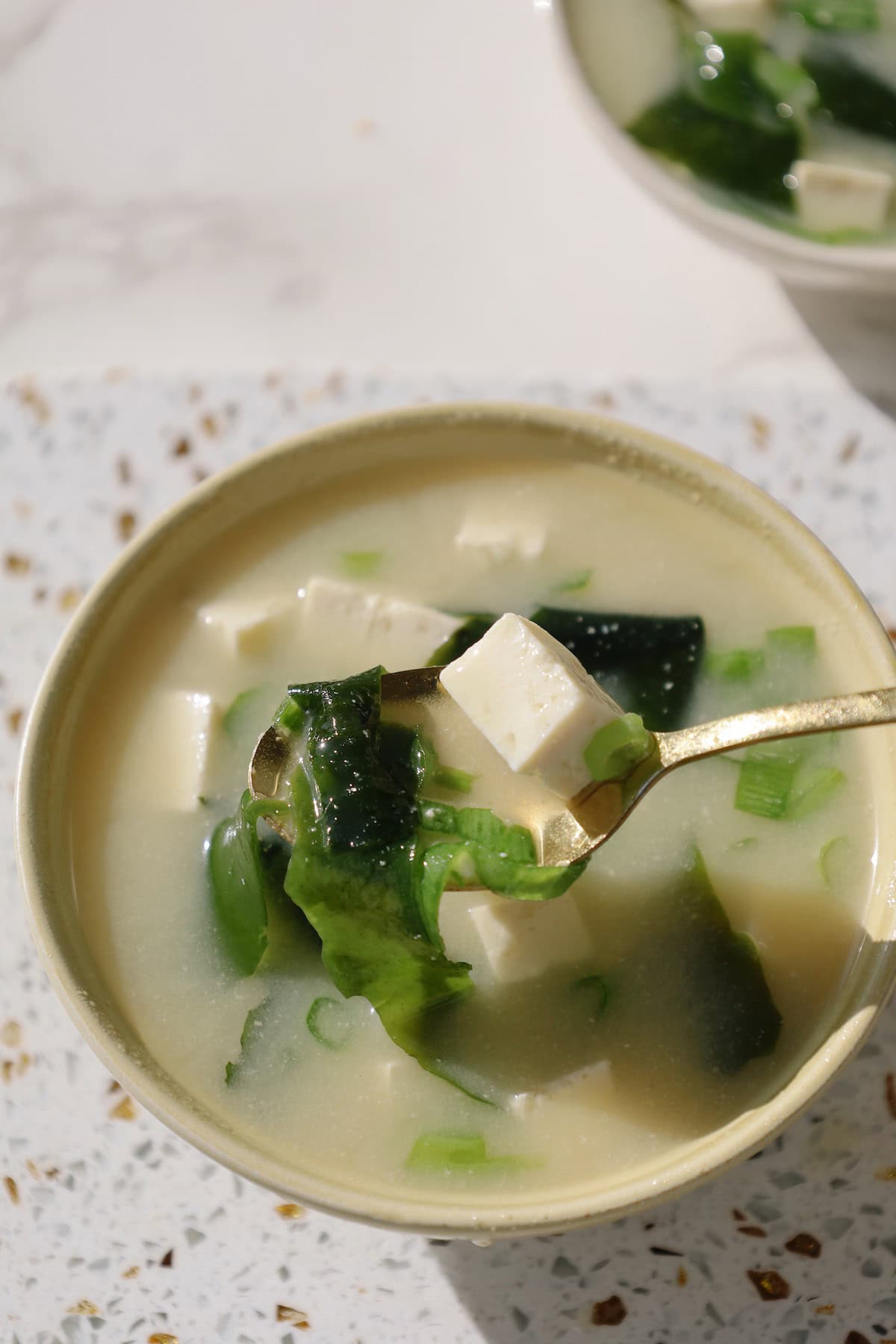
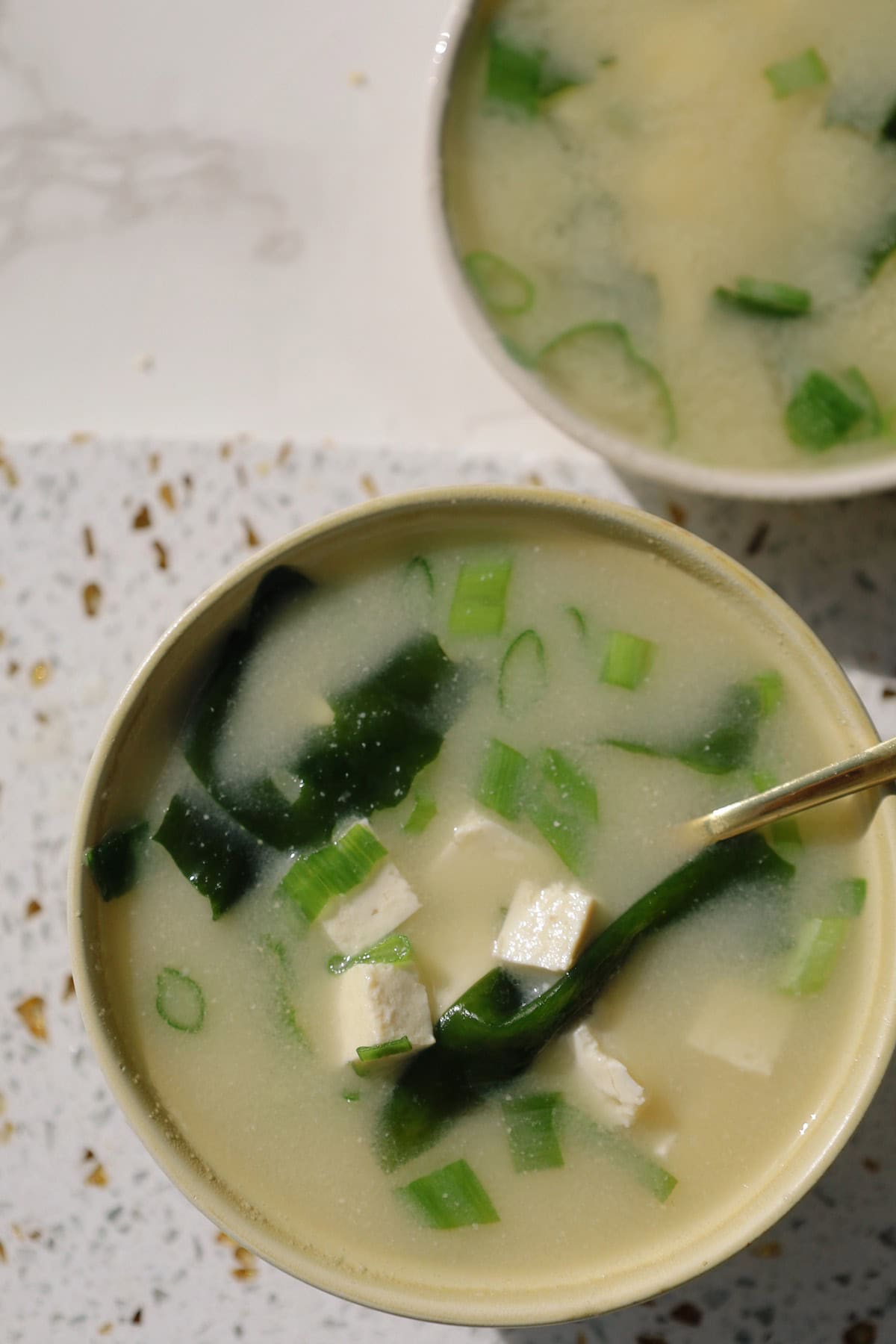
Traditional Japanese miso soup often uses bonito flakes (dried fish) in the base, but my recipe skips that entirely. Instead, it’s 100% vegetarian and vegan-friendly thanks to a rich kombu and shiitake dashi that brings all the same savory depth without the seafood. Whether you’re meal-prepping for the week or just craving something warm on a chilly day, this miso soup recipe is one you’ll come back to again and again. And, if you’re craving more delicious soup recipes, check out my creamy tomato soup recipe, hearty black bean soup, and protein-rich lentil soup! Or, if you’re looking for more ways to use silken tofu, check out my cold tofu recipe with a gochujang sauce!
Quick Look: Miso Soup
✅ Recipe Name: Homemade Miso Soup
🕒 Ready In: About 15 minutes
👪 Serves: 2
🥣 Main Ingredients: kombu, dried shiitake mushrooms, white miso paste, wakame, tofu, and scallions
👌 Difficulty: Easy. Make a homemade vegan dashi broth with kombu and shiitake mushrooms, stir in white miso, then add tofu, wakame, and scallions for a comforting Japanese soup.
SUMMARIZE & SAVE THIS CONTENT ON:
Table of Contents
What Are the Benefits of Miso Soup?
Miso soup (味噌汁, miso shiru) is one of the cornerstones of Japanese cuisine — a simple soup made by dissolving miso paste into dashi stock, then adding a few ingredients like tofu, seaweed, and scallions. Over time, miso soup became an essential part of daily meals in Japan, often served as part of the traditional “one soup, three dishes” setup.
Plus, this miso soup recipe isn’t just cozy and delicious — it’s surprisingly good for you too. Miso paste is made from fermented soybeans, which may help support gut balance. Because it’s also low in calories and made with ingredients like tofu, seaweed, and scallions, it offers light nourishment that feels comforting rather than heavy.
Many people find miso soup soothing and hydrating — the kind of warm, salty comfort that feels restorative during colder months.
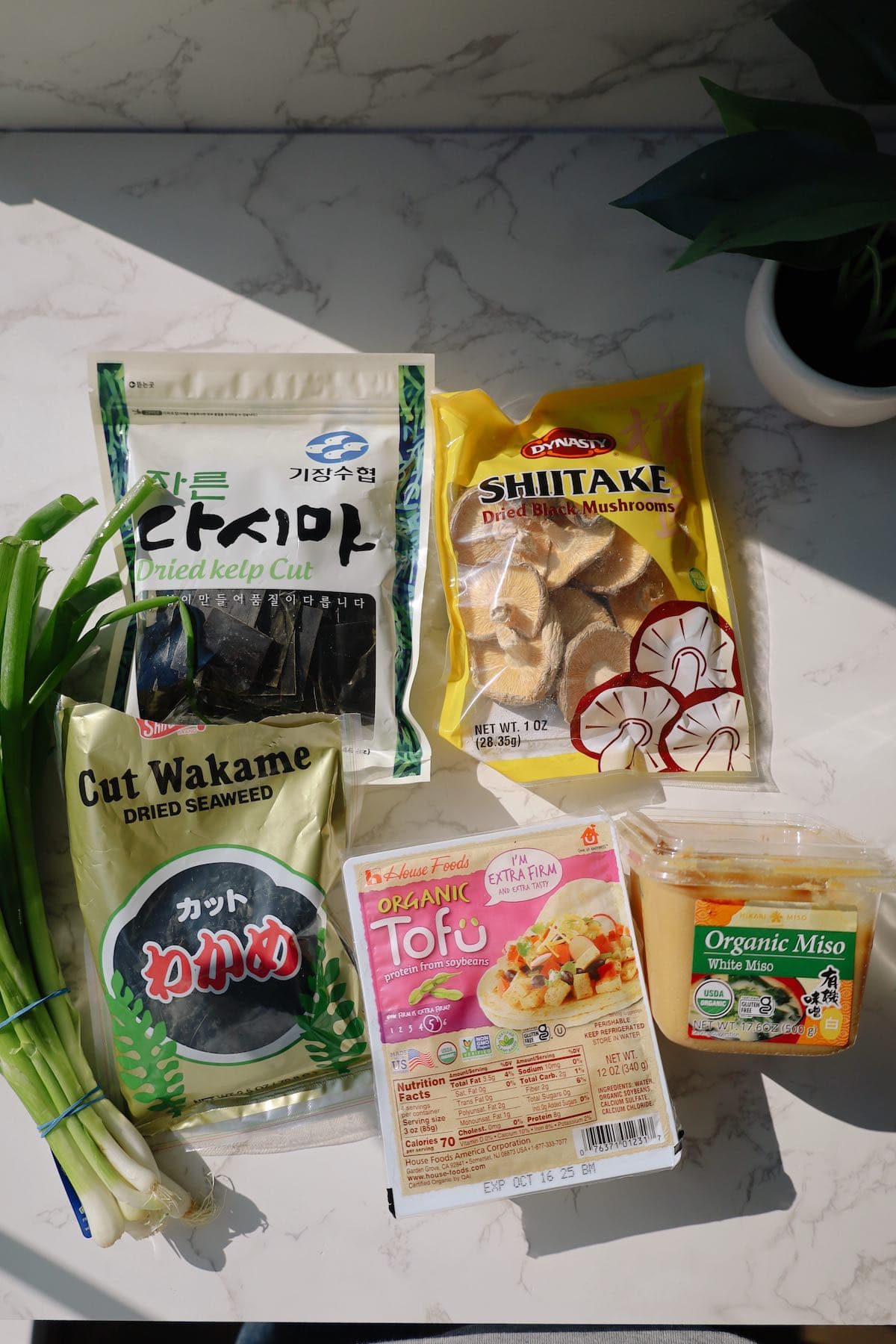
Key Ingredients for my Miso Soup Recipe
Kombu (dried kelp): The foundation of vegan dashi — rich in natural glutamates that give miso soup its signature savory flavor.
Dried shiitake mushroom: Adds deep, earthy umami to balance the sweetness of white miso.
Water: Simple, but crucial. Letting kombu and shiitake steep properly builds a flavorful base.
White miso paste: I use white (shiro) miso for its mild, slightly sweet flavor. It’s less salty than red miso and keeps the broth light and balanced.
Wakame (dried seaweed): Adds texture and oceanic notes. A little goes a long way — it expands significantly in water.
Tofu: I like extra-firm tofu for a bit more structure, but you can use soft or silken if you prefer a creamier texture.
Scallions: Add color, freshness, and a subtle bite that complements the savory broth.
Together, these ingredients create the perfect balance of clean, savory, and satisfying flavors — all without using bonito flakes or animal products.
Wakame vs. Kombu
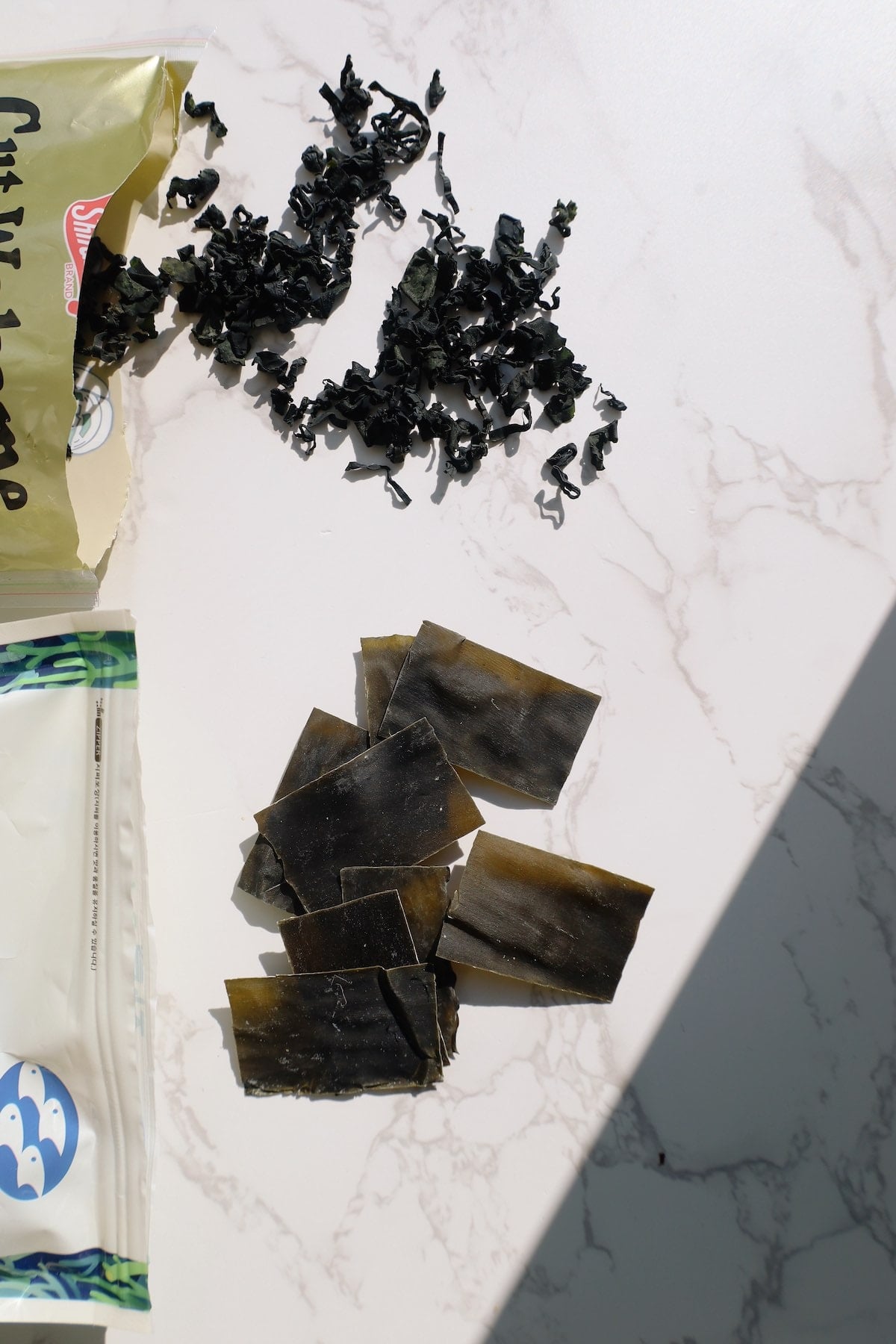
Though both are types of seaweed, wakame and kombu have totally different jobs here.
- Kombu forms the base of the soup — it’s simmered to extract umami and then removed before serving. Think of it like a tea bag for flavor.
- Wakame is the edible seaweed you actually eat. It rehydrates in the soup and adds that classic silky texture.
Tip: wakame expands a lot when soaked. A small teaspoon can easily triple in size. Use it sparingly unless you want seaweed soup for days
How to Make Your Own Vegan Dashi
A flavorful miso soup starts with a good dashi. Here’s how to make your own vegan version:
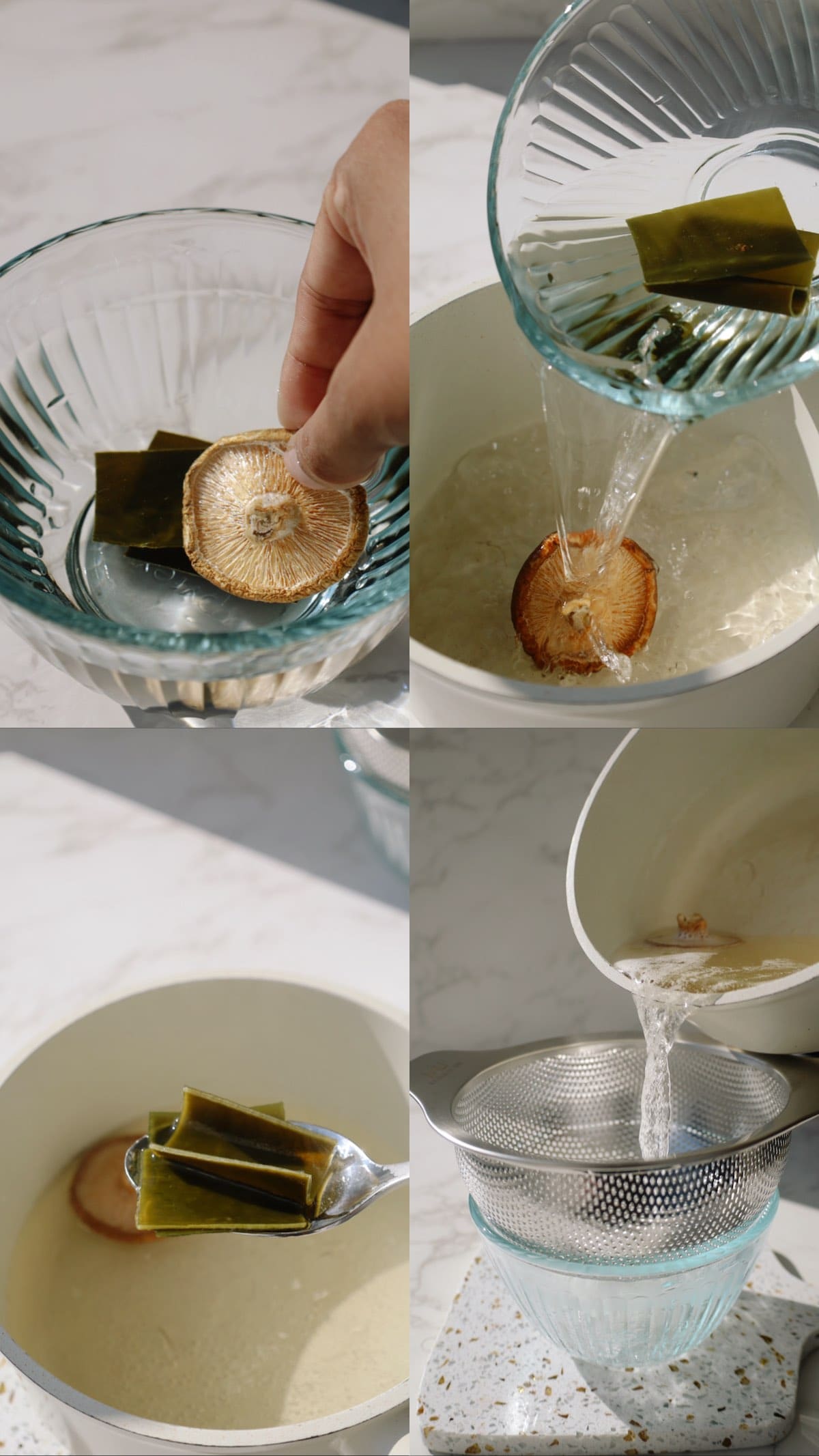
- Make the dashi: In a medium pot or bowl, combine cold water, kombu, and the dried shiitake mushroom. Let it soak for at least 30 minutes to extract flavor — or refrigerate overnight for a deeper, richer broth.
- Simmer: Place the pot over medium heat and slowly bring it to a gentle simmer. Just before it starts to boil, remove the kombu (boiling it can make the broth slimy or bitter). Continue simmering the shiitake for another 5 minutes to infuse the dashi with earthy depth, then remove it from the heat.
This dashi gives you the same depth as traditional bonito-based versions, without any fish.
Recipe Tips + Common Mistakes to Avoid
- Don’t use too much wakame. It expands dramatically and can overwhelm the soup.
- Don’t boil the miso. This destroys its beneficial probiotics and dulls flavor.
- Dissolve the miso first. Mixing it directly into the pot creates clumps and uneven saltiness.
- Use quality miso paste. Cheap miso can taste harsh or overly salty — splurge on a good brand.
- Serve immediately. Miso settles at the bottom if left too long; stir gently right before serving.
These little details make all the difference between a good miso soup and a great one.
What Can You Eat With my Miso Soup Recipe? My Serving Suggestions:
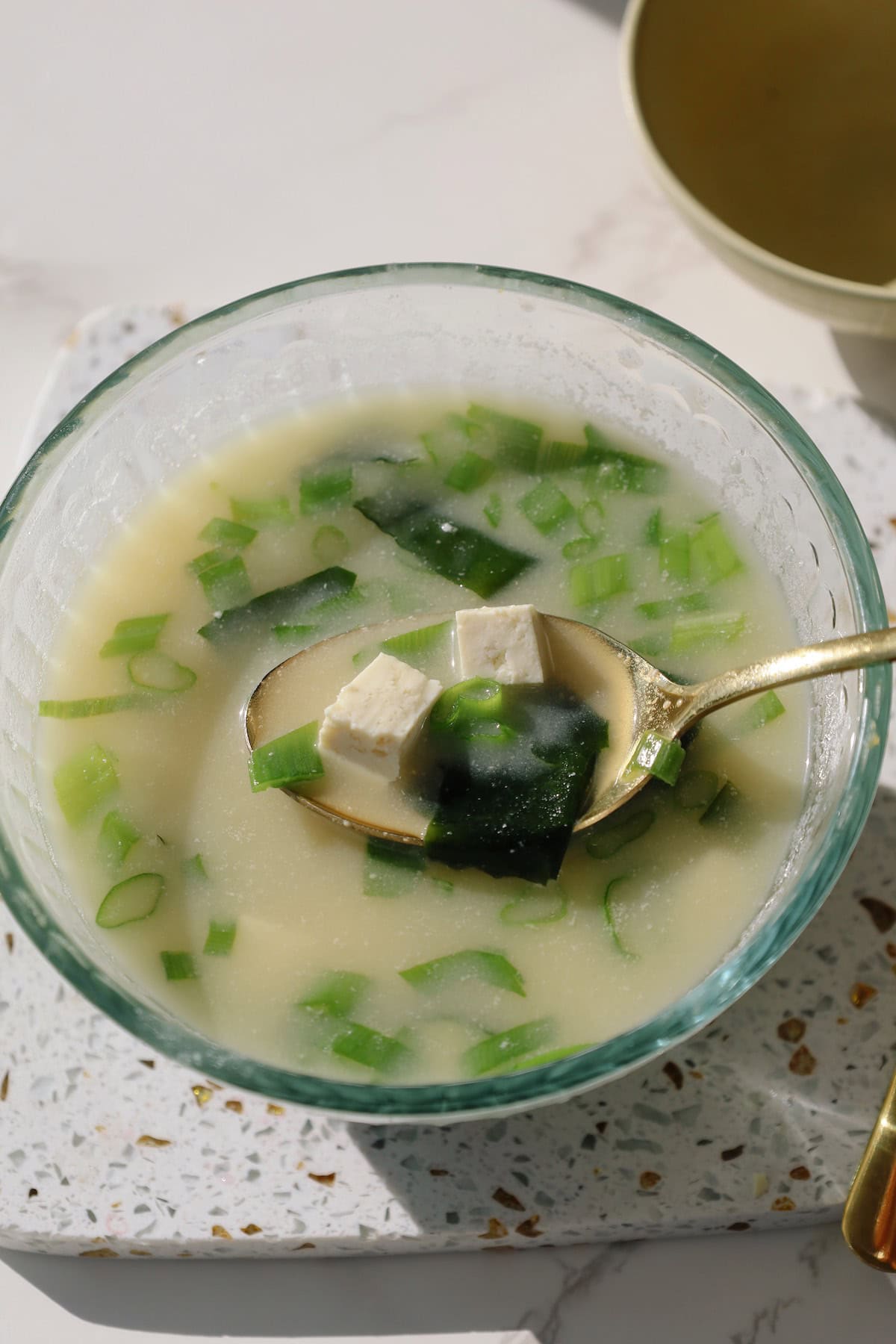
Miso soup works beautifully as a side, a starter, or a light lunch. Try pairing it with:
- Steamed rice and pickles for a simple, Japanese-inspired meal.
- Sushi, tempura, or veggie dumplings.
- Udon or soba noodles on the side.
- A bowl of edamame or stir-fried greens.
It’s also great on its own for a quick lunch — especially when you just want something warm, nourishing, and low-effort.
FAQ
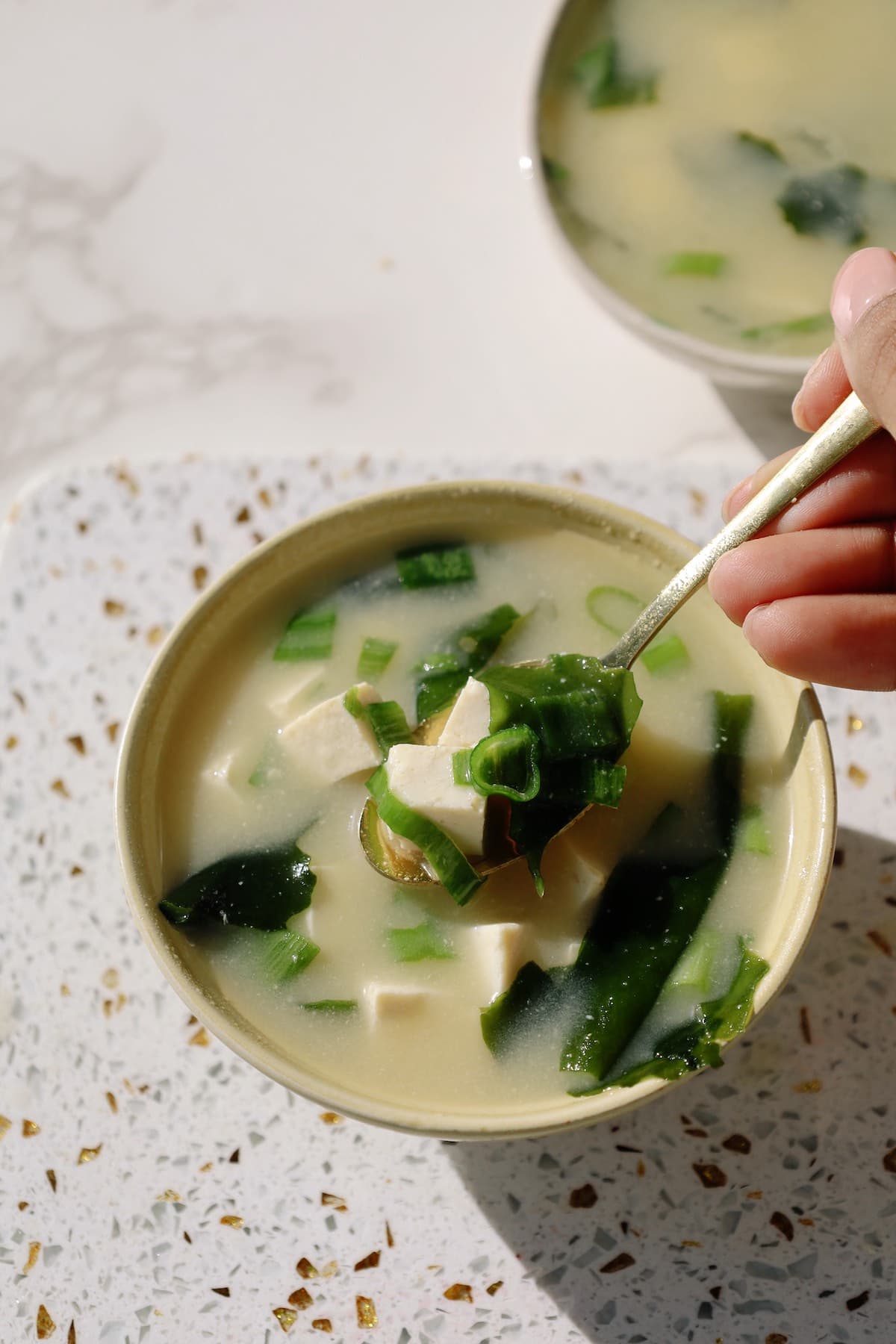
Miso soup — or miso shiru (味噌汁) — is one of Japan’s most beloved comfort foods. At its core, it’s a simple blend of miso paste, dashi broth, and a few flavorful additions like tofu, scallions, and seaweed. Despite its simplicity, it’s layered with deep umami and centuries of history. Every region of Japan has its own spin — some use red miso, others white, some include vegetables or mushrooms — but the heart of miso soup remains comfortingly the same: miso + dashi + simplicity.
Miso itself is a fermented soybean paste, made by combining soybeans with salt and koji (a fermentation culture also used in sake and soy sauce). This fermentation process not only gives miso its savory, slightly sweet flavor but also fills it with probiotics and enzymes that support digestion and gut health.
I think that Extra-firm or firm tofu works best because it holds its shape. For a softer texture, silken tofu can be used — just add it at the end.
I recommend white miso (shiro miso) for this recipe — it’s mild, sweet, and balanced. Red or mixed miso can also be used for stronger flavor, just reduce the amount slightly.
Completely normal! Miso naturally settles if it sits too long. Give it a gentle stir before drinking.
Miso Soup Recipe
Equipment
- 1 small sieve
Ingredients
Vegan Dashi
- 2 cups water
- 3 small pieces of kombu, (about 2 x3 inches in size for each piece)
- 1 dried shiitake mushroom
Other
- 4 tbsp scallions
- 3 ounces extra firm tofu
- 1.5 tsp wakame
- 2 tbsp + 1 tsp white miso paste
Instructions
- Make the dashi: In a medium bowl, add cold water, kombu, and the shiitake mushroom. Let everything soak for at least 30 minutes. (Or leave it in the fridge overnight. The longer it soaks, the more flavor that is infused).
- Simmer: Bring the mixture to a soft simmer. Right before the mixture starts bubbling, remove the kombu (otherwise the broth will get slimy and bitter). Continue simmering the shiitake mushroom and water for 5 minutes before removing from the heat.
- Add wakame: Once the heat is off, stir in wakame and let it rehydrate in the warm dashi.
- Mix the miso: Place your miso paste in a small fine-mesh sieve and dip it into the warm dashi. Use a spoon or chopsticks to gently press and stir the paste through the sieve until fully dissolved. This helps the miso blend smoothly without clumps.
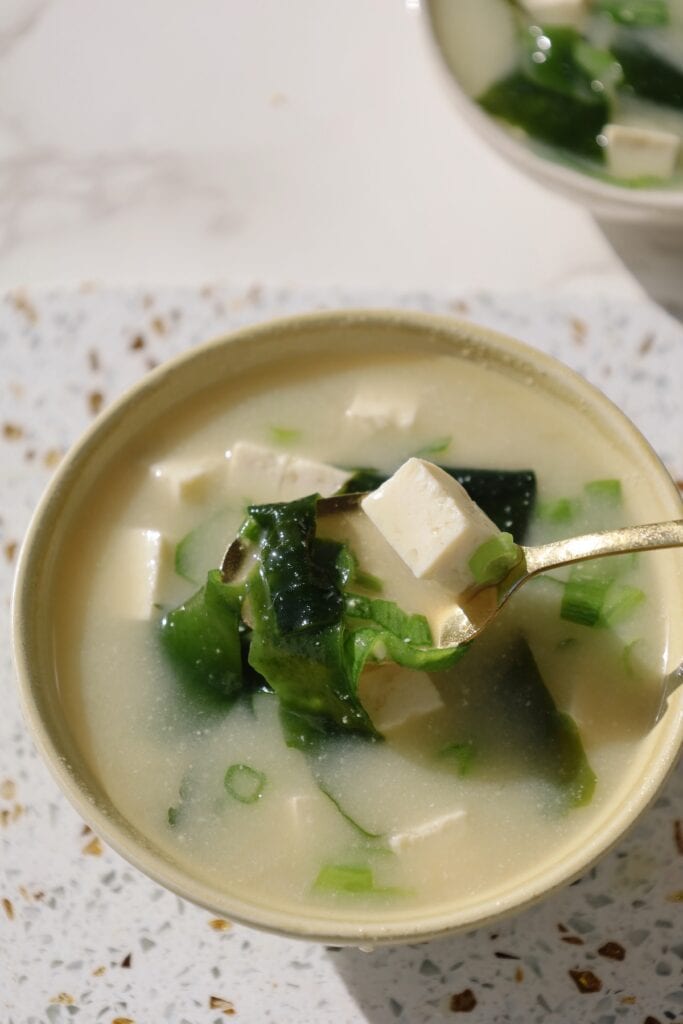
- Add tofu and garnish: Gently stir in cubed tofu, and top with sliced scallions before serving.
Notes
Nutrition
Nutrition information is automatically calculated, so should only be used as an approximation.






Miso soup is a lovely option when you want something warm, light, and full of savory flavor. I like how a few simple ingredients can create such a satisfying bowl. This is a great recipe to keep handy. I also find restaurant menu and nutrition details useful when exploring different dining options.
I never thought to make my own miso soup. Making it in under 15 minutes is a bonus!
Thank you for making miso soup meatless. It’s such a real struggle to find tasty vegetarian/vegan versions of Japanese food.
Ultimate cozy vibes!
Always thought miso soup would be really complicated to make but this was so straightforward!
Yummm, I’ve always wanted to know how to make the delicious miso soups I eat at Japanese restaurants, and this recipe was so helpful to make it at home! Amazing!
So tasty!