
I was born in Chandigarh and raised in New Delhi, where masala chai is part of everyday life. It was served in the mornings, offered to guests, and poured throughout the day in between meals. Some of my fondest memories were going to the Gurdwara and drinking several hot cups of chai with my grandma. And this tradition continued when we moved to Brampton, Ontario in Canada.
For this masala chai recipe, I carefully tested the proportions to recreate the comforting chai I remember from childhood. It is warmly spiced, creamy, full-bodied, and ready in about 15 minutes.

Because I grew up drinking authentic Indian chai, this recipe is based on the ingredients, proportions, and stovetop method commonly used in Indian homes. This is not a café-style chai tea latte you get from Starbucks—it is a strong, fragrant masala chai made by simmering black tea with whole spices, fresh ginger, and milk.
And, if you’re craving more masala chai flavors make sure to check out my fusion recipe for a Masala Chai Tiramisu! And make sure to enjoy this hot cup of chai with a side of Crispy Aloo Pakoras or even some Spicy Maggi if you’re feeling nostalgic.
A Quick Look at the Recipe:
✅ Recipe Name: Masala Chai
🕒 Ready In: 15 minutes
👪 Serves: 2
🥣 Main Ingredients: black tea, cardamom, cloves, peppercorns, fennel seeds, cinnamon, ginger, milk, sugar or jaggery
👌 Difficulty: Easy. Stovetop tea simmered with whole spices, milk, and sweetener.
SUMMARIZE & SAVE THIS CONTENT ON:
What is Masala Chai?
Masala chai is a traditional Indian tea made by simmering black tea with milk, water, sugar, and warming spices. The word masala means a blend of spices, while chai simply means tea, so “masala chai” translates to spiced tea.
The exact spice blend varies from family to family, but common ingredients include fresh ginger, cardamom, cinnamon, cloves, and black pepper. Some versions are bold and peppery, while others are sweeter and more cardamom-forward. So feel free to adjust this recipe to your palette
Table of Contents
- A Quick Look at the Recipe:
- What is Masala Chai?
- Key Ingredients and Why They Matter
- What Types of Tea Are Best for Masala Chai?
- How to Make Masala Chai
- How to Prevent Milk From Curdling in Masala Chai
- How to Aerate Your Chai
- Masala Chai FAQs
- Other Drink Recipes You’ll Love
- Masala Chai (My Authentic Family Recipe!)
Key Ingredients and Why They Matter

“Masala” means “a blend of spices.” So, for masala chai, the most important ingredients are the combination of spices you use. These are my favorite blend:
- Whole Spices: Star anise, black cardamom, green cardamom, cloves, black peppercorns, cinnamon stick, and fennel seeds. They add warmth, depth, and a hint of spice that makes the tea so comforting. Using whole spices instead of ground gives a fresher, more intense flavor.
- Tea: It is essential to use black tea for this recipe. Other variations will not work. specifically, I used a black tea bag from a brand called Red Label because it has the bold, malty flavor needed to stand up to the milk, sugar, ginger, and whole spices. (I discuss more tea options below in depth.)
- Ginger: Fresh ginger is non-negotiable. It adds a little kick and that signature warmth. I usually mince it to get as much flavor as possible.
Substitutions and Variations:
- Sweeten your chai: with either sugar or jaggery. White sugar is most common, but jaggery (Indian unrefined cane sugar) gives a deeper, earthy sweetness. Honey or maple syrup are also great modern swaps.
- Milk types: Whole milk is the most traditional variant and gives you the richest, creamiest result. For a dairy free option, Oat milk or Soy are my favorite. (I also use oat milk for my cozy Golden Milk recipe).
What Types of Tea Are Best for Masala Chai?

A strong black tea works best for masala chai because it needs enough flavor to hold up to the milk, sugar, ginger, and spices. I personally use Red Label tea because it is convenient and available at my local grocery store (it’s an extremely common cheap option that many Indian families use). But here are some others:
- CTC tea: CTC stands for Crush, Tear, Curl, which describes how the tea leaves are processed into small granules. It brews quickly and produces the deep color and bold flavor commonly associated with Indian chai. CTC tea is one of the best options when you want a strong, full-bodied cup.
- Assam tea: Assam black tea has a rich, malty flavor that pairs especially well with milk and warming spices. Both loose-leaf Assam and Assam tea bags work well.
- Ceylon tea: Ceylon tea has a brisk, balanced flavor and makes a slightly lighter cup than Assam or CTC tea.
- English breakfast tea: This is a good substitute when Indian black tea is unavailable. Choose a strong, unflavored blend so the tea flavor does not get lost.
- Darjeeling tea: Darjeeling is lighter and more floral, so it will create a more delicate chai. It can work, but it may not hold up as well to strong spices or a higher proportion of milk.
- Loose-leaf tea or tea bags: Either works. Loose tea, especially CTC, generally produces a stronger cup, while tea bags are convenient and consistent. Avoid Earl Grey and other flavored black teas because their added flavors can compete with the traditional spices.
The full written masala chai recipe with measurements is below on the recipe card.
How to Make Masala Chai
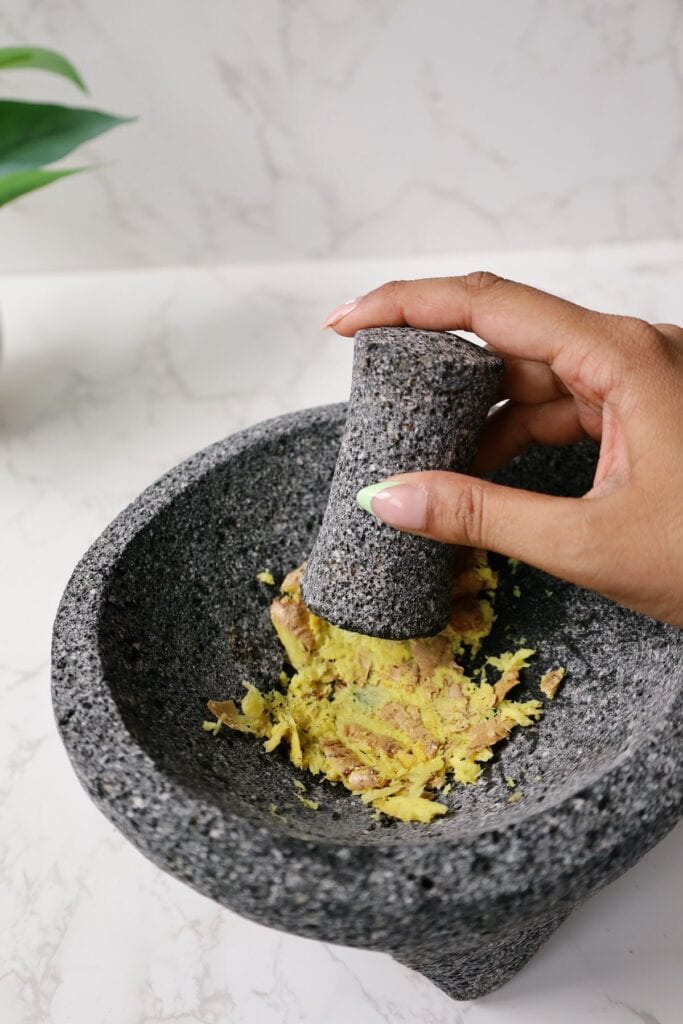
- Crush the ginger, then the spices: Start by crushing the ginger in a mortar and pestle to help release all its juice and flavor, and remove. Then add the cardamom, cloves, peppercorns, fennel seeds, and cinnamon, and lightly crush the whole spices to break them up.
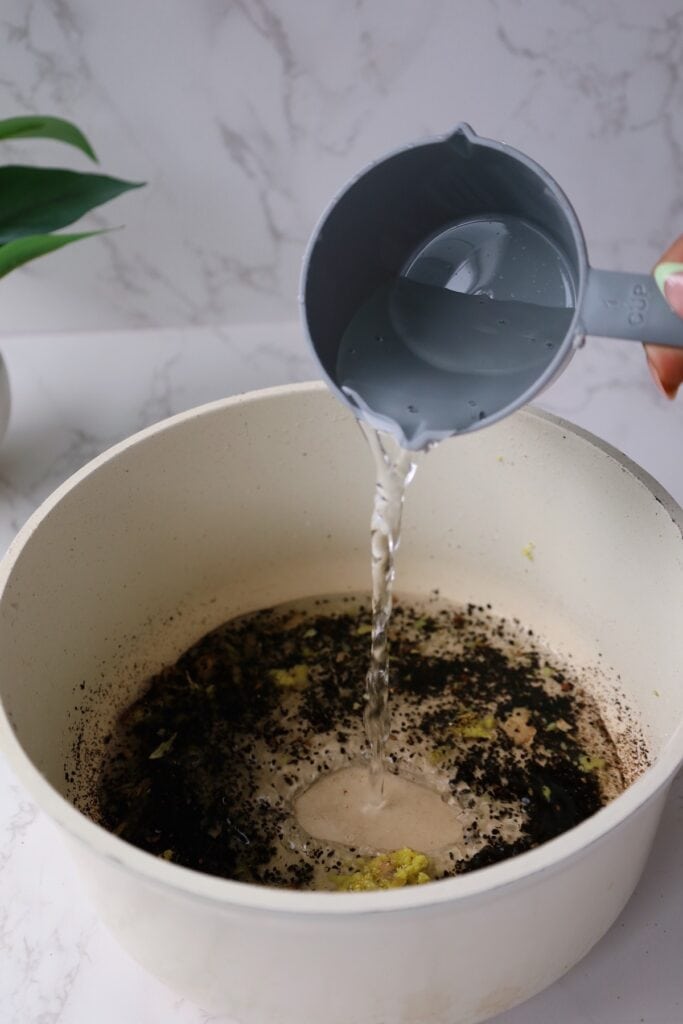
- Add the tea, spices, ginger, and water to the pot: Add the black tea, cardamom, cloves, peppercorns, fennel seeds, cinnamon, crushed ginger, and water to a saucepan. Bring everything to a simmer and let it cook for a few minutes so the tea darkens and the spices infuse the water.
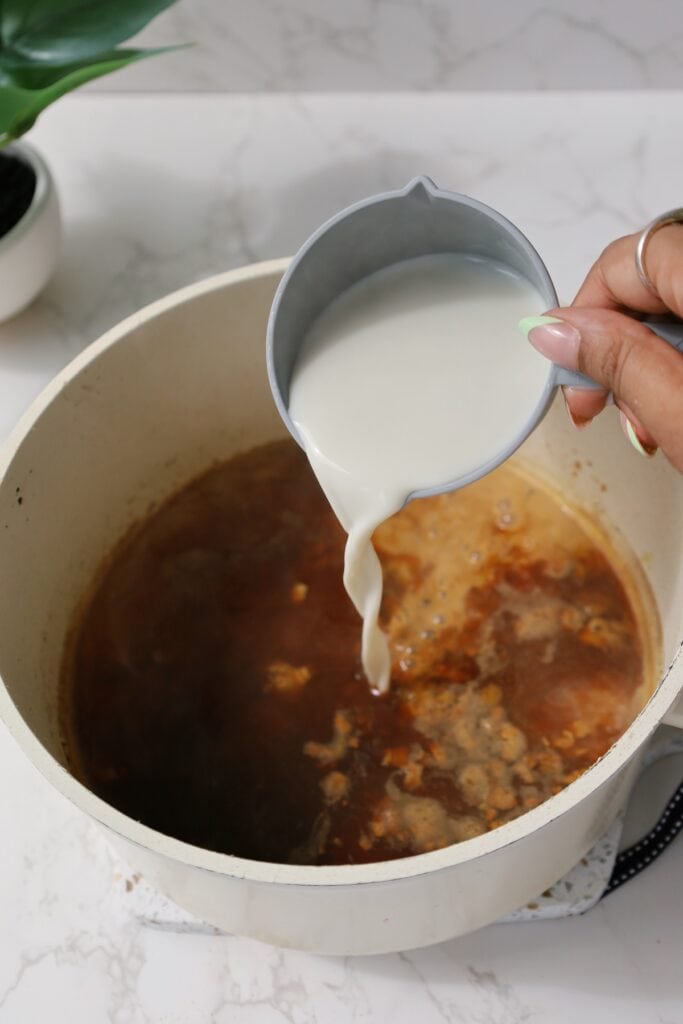
- Add the milk: Pour in the milk and stir to combine. Let the chai continue to simmer until it turns a warm, creamy brown color.
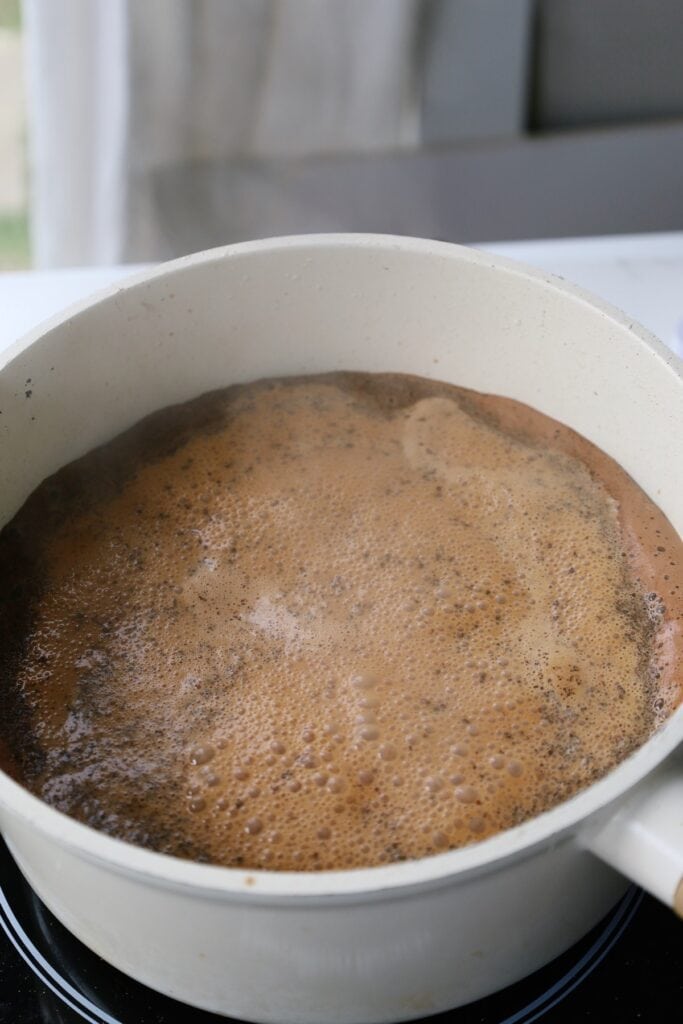
- Bring it to a gentle boil: Increase the heat slightly if needed and let the chai come up until hot, frothy, and just starting to rise. Keep a close eye on it so it does not boil over.

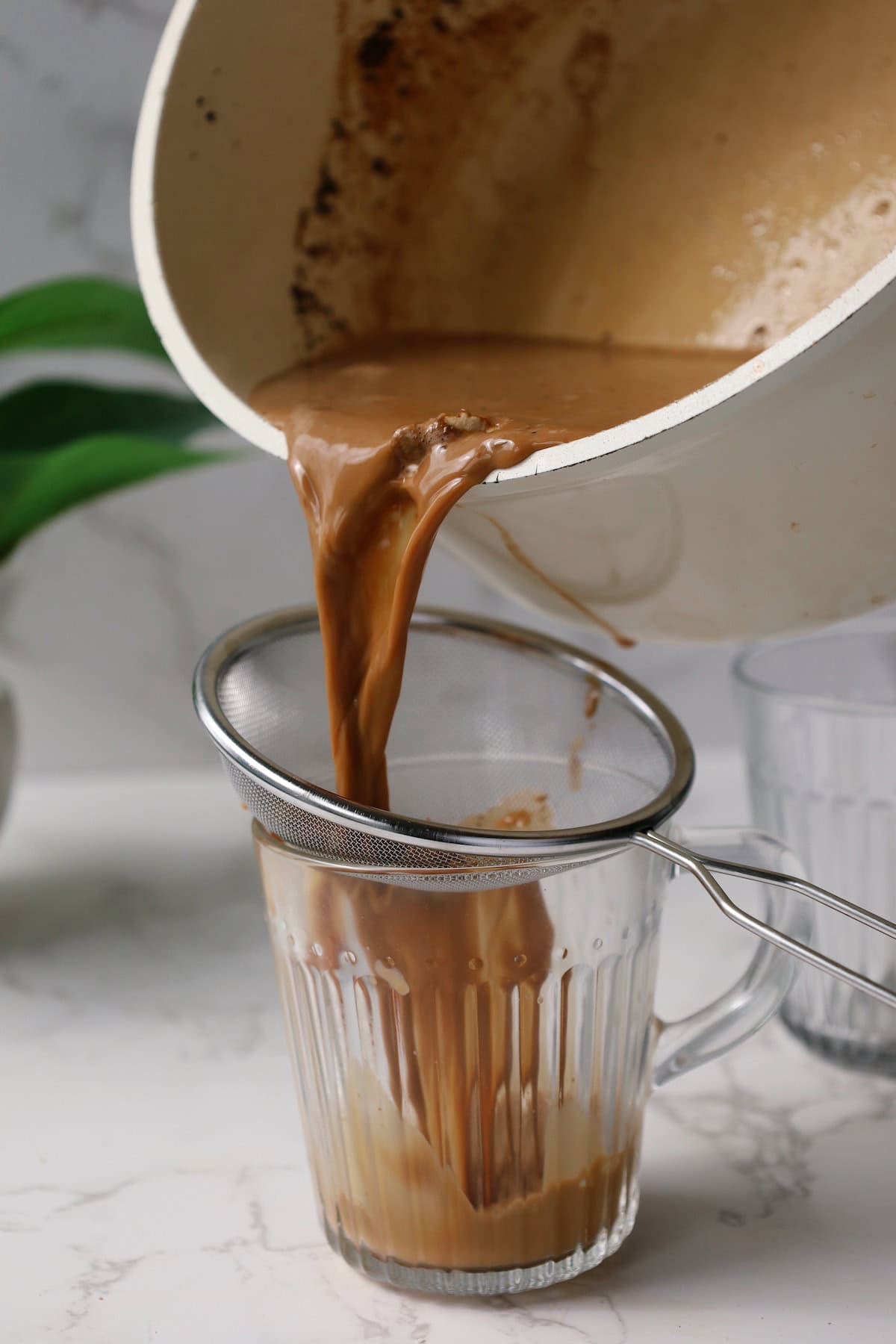
- Strain the chai: Remove the pot from the heat and strain the chai into mugs or glasses to catch the whole spices, ginger, and tea leaves.
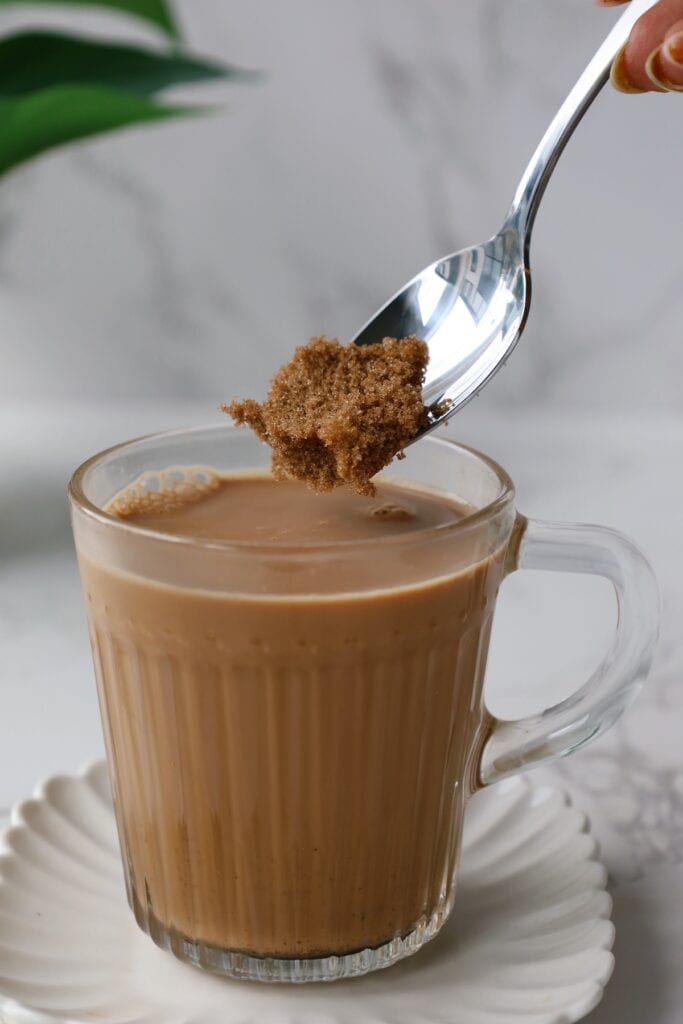
- Sweeten and serve: Add sugar or jaggery to taste, stir well, and serve hot.
How to Prevent Milk From Curdling in Masala Chai
One of the trickiest parts of making masala chai is ensuring that the milk doesn’t curdle, especially when using fresh ginger. Ginger contains enzymes that can cause milk to curdle if not handled properly. Here’s how to prevent that:
- Boil the spices and ginger first: Make sure to boil the water with the spices and ginger before adding the milk. This neutralizes the enzymes in the ginger that can cause curdling.
- Add milk gradually: Once the tea and spices have simmered properly, lower the heat and add milk slowly, stirring constantly.
- Use fresh milk: Sometimes milk that’s close to spoiling will curdle more easily. Make sure your milk is fresh. Or, switch to a plant-based milk like oatmilk.
How to Aerate Your Chai
Aerating chai gives it a lighter, frothier texture and helps cool it slightly before serving. Once the chai is fully brewed and strained, carefully pour it back and forth between two heat-safe cups or small pitchers from a short height.
Start close to the cup, then gradually raise the pouring vessel as you get more comfortable. Repeat the process three to five times, or until a thin layer of foam forms on top. Pour slowly and use vessels with plenty of extra room to prevent spills.
This step is optional, but it gives homemade masala chai the frothy finish often seen at tea stalls and in Indian homes.
Masala Chai FAQs
Not exactly—“chai tea” is a bit redundant since chai already means tea. But the phrase has become common in English to refer specifically to spiced tea.
Over-steeping the tea leaves or using too much can cause bitterness. Try steeping black tea for only 3–5 minutes and balancing it with milk and sweetener.
Traditionally, masala chai is made with a 1:1 ratio of milk to water — this gives you a balanced cup that’s creamy without being too heavy. Some families prefer a 2:1 water-to-milk ratio for a lighter chai, while others love 2:1 milk-to-water for extra richness. My sweet spot is 1.5 cups water to 1.5–2 cups milk for two servings. If you’re using plant-based milk, go lighter on the milk side since many curdle or thicken quickly.
Other Drink Recipes You’ll Love

Please remember to leave a review if you make this recipe! The feedback helps me to become a better cook and develop amazing recipes for you.
Masala Chai (My Authentic Family Recipe!)

Equipment
- mortar and pestle
- spice grinder
Ingredients
- 3 cardamoms
- 2 cloves
- 10 peppercorns
- 1/8 tsp fennel seeds
- Small stick of cinnamon
- Small piece of ginger, 2 tsp crushed
- 2 tbsp tea
- 2 cups water
- 1.5 -2 cups milk, depends on what kind of milk you use and how strong you like your chai
- Sugar or jaggery for sweetness, to taste
Instructions
- Grind the spices – Using a spice grinder, grind 3 green cardamom pods, 2 cloves, 10 black peppercorns, 1/8 teaspoon fennel seeds, and a small stick of cinnamon until coarsely ground.
- Crush the ginger – Using a mortar and pestle, crush a small piece of fresh ginger (about 2 teaspoons). This helps it infuse more deeply into the chai.
- Boil the spices and ginger – In a saucepan, combine 2 cups of water with the ground spices and crushed ginger. Bring to a boil, then reduce the heat and let it simmer for 3–5 minutes so the flavors can fully develop.
- Add black tea – Stir in 2 tablespoons of loose black tea. Simmer for another 2–3 minutes depending on how strong and bold you like your chai.
- Add milk and let it bubble– Pour in 1.5 to 2 cups of milk, depending on how strong or creamy you like your chai, and what type of milk you're using. Turn the heat up and allow the chai to bubble up to the top of the pan, then reduce the heat and let it fall back down. Repeat this bubbling process at least once or twice—it's key to getting that rich, chai flavor you get from tea stalls!
- Sweeten to taste – Add sugar or jaggery to taste. Traditional Indian chai is often made with jaggery (gud) for a deep, earthy sweetness, but any sweetener works here.
- Simmer and strain – Let the chai simmer for another 2–3 minutes to blend the flavors. Then strain into cups using a fine mesh strainer and serve hot.
- Optional: Repeat the boil-and-reduce cycle – Once the chai rises, immediately lower the heat and let it fall back down. Then increase the heat and allow it to rise once more before reducing it again. Repeating this cycle helps the black tea, ginger, and spices infuse more deeply into the milk, creating the strong, rounded flavor characteristic of homemade Indian chai. Watch the saucepan closely, since the chai can boil over quickly.
Notes
Nutrition
Nutrition information is automatically calculated, so should only be used as an approximation.






the instructions say to add 2 tbs tea but the ingredients list says 1tbs … both have the same amount of other spices… is that a misprint?
This recipe put the mmmmm in masala! 10/10
Tastes amazing
This masala chai is my go-to comfort drink! I make it with soy milk and it stays creamy!
This was delicious! Perfect for the holidays too since it’s warm and comforting 💕
I absolutely love masala chai, so I was thrilled to find this recipe. It’s super easy to make and simple to follow. I double up on the ingredients so I can have a big batch. 10/10!!!