
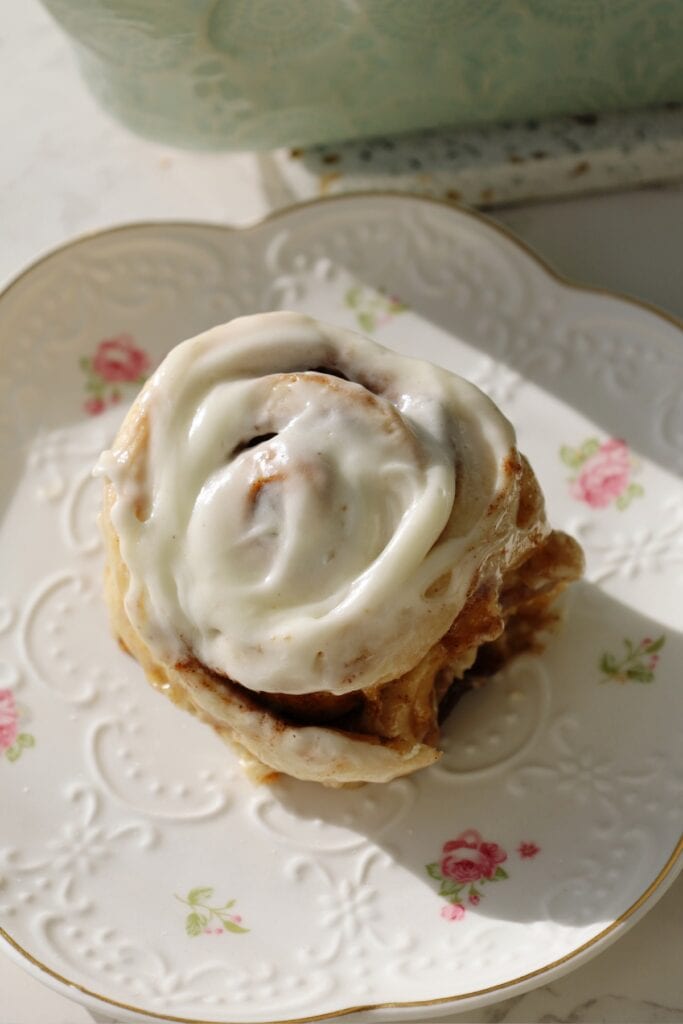
If you’ve been chasing the ultimate homemade cinnamon roll recipe — soft, gooey, and better than Cinnabon — this is it. These cinnamon rolls are ultra plush, cloud-soft, and melt in your mouth with every bite. The dough is rich but light, thanks to a combo of bread flour and all-purpose flour, sour cream for tenderness, and a pour of warm heavy cream that gives each roll a glossy, bakery-style finish.
Once you try these, you’ll never need another homemade cinnamon roll recipe again! They’re perfect for baking for the holidays – I make these every Thanksgiving and Christmas. And, if you’re looking for other sweet treats, try my Masala Chai Tiramisu, S’mores Cookies, and Salted Caramel Cheesecake Cookies. If you love cinnamon rolls but want something quicker, try my cinnamon roll puff pastry for an easy shortcut version.
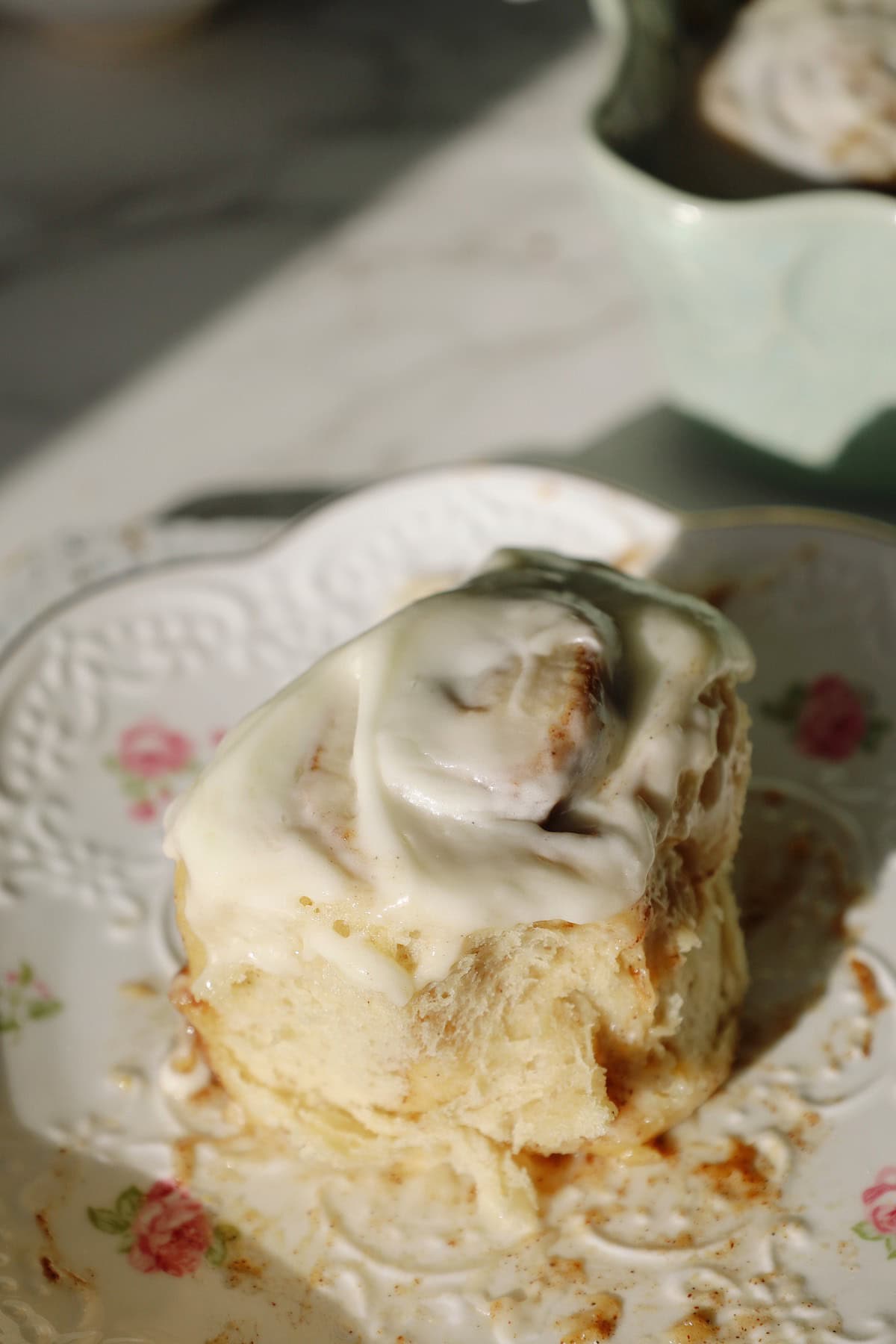
Quick Look: Homemade Cinnamon Rolls
✅ Recipe Name: Homemade Cinnamon Rolls with Cream Cheese Frosting
🕒 Ready In: 2 hours 5 minutes (1 hour 30 minutes prep, including rising time, + 35 minutes baking)
👪 Serves: 10 cinnamon rolls
🥣 Main Ingredients: Bread flour, all-purpose flour, whole milk, yeast, sour cream, butter, brown sugar, cinnamon, eggs, cream cheese, powdered sugar, and heavy cream
👌 Difficulty: Moderate. Prepare an enriched yeast dough and let it rise until doubled. Spread with buttery cinnamon-sugar filling, roll and slice into spirals, and allow a second rise. Pour warm cream over the rolls, bake until fluffy and golden, then cover with rich cream cheese frosting.
SUMMARIZE & SAVE THIS CONTENT ON:
Table of Contents
The Science Behind Soft Homemade Cinnamon Rolls
What makes some cinnamon rolls dense and others cloud-soft? It’s all in the science of dough. These rolls hit that perfect balance because every ingredient plays a specific role in how the gluten develops, how moisture is retained, and how the crumb stays tender.
- Bread flour + all-purpose flour: Bread flour brings protein, which builds gluten for structure and elasticity — that signature chewy pull when you tear into a roll. All-purpose flour lightens it up so the texture stays soft and fluffy instead of bready or tough.
- Sour cream: The acid in sour cream tenderizes the gluten strands, giving the rolls that plush, almost melt-in-your-mouth crumb. It also adds fat, which keeps the interior moist long after baking.
- Butter and eggs: Both are considered “enriching” ingredients in dough science. Butter coats the flour particles, limiting gluten formation for a softer texture, while eggs add richness and help the rolls rise high without collapsing.
- Heavy cream: The warm cream poured over the rolls before baking does double duty — it adds moisture and slows down crust formation, so the centers can expand fully. That’s why the inside stays gooey while the tops get glossy and golden.
In short: fat, moisture, and controlled gluten development are the secret trio behind truly soft cinnamon rolls. Get those right, and you’ll never end up with dry or dense rolls again.
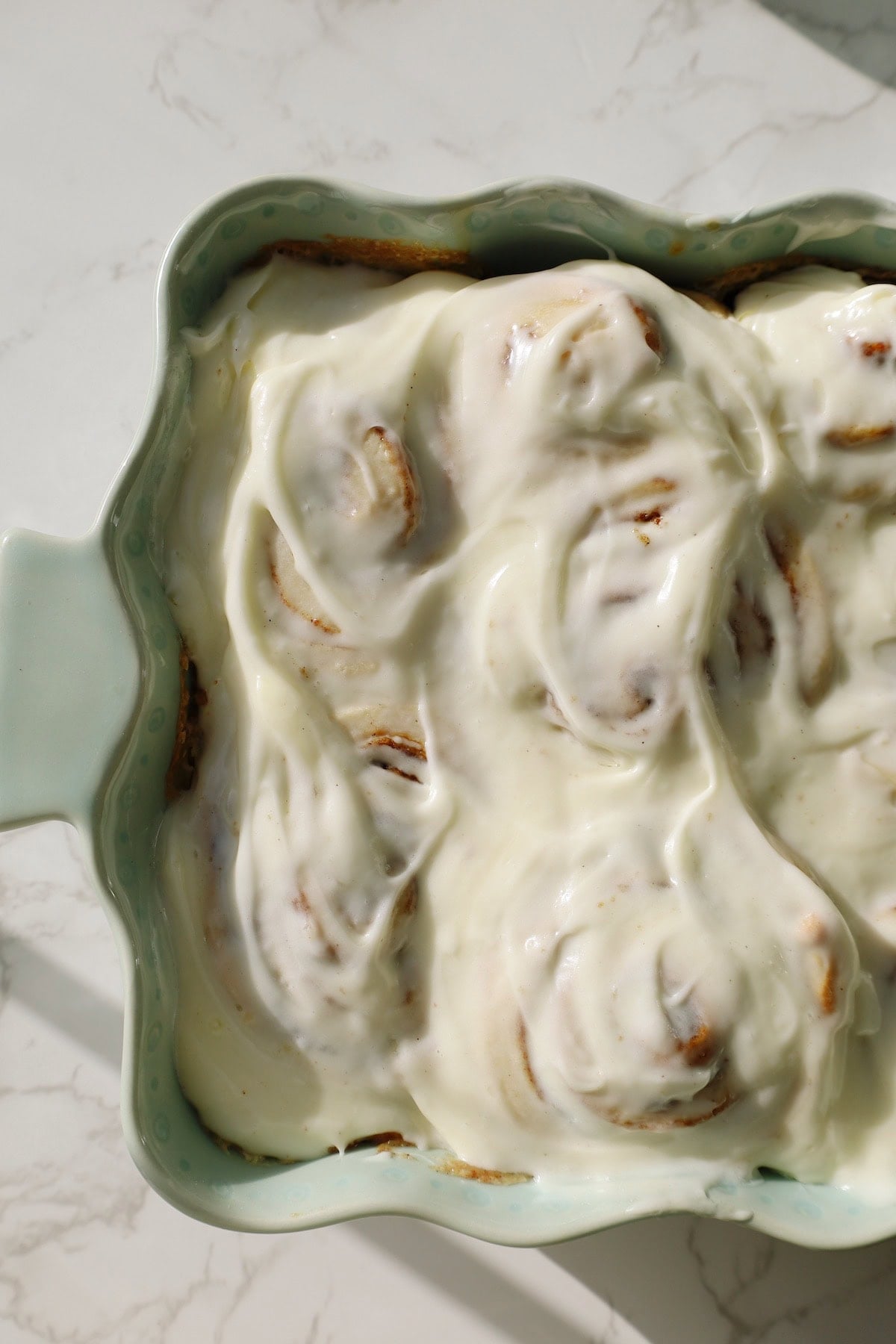
Why Do Cinnamon Rolls Need to Be Proofed Twice?
To make my homemade cinnamon roll recipe – you need to let the dough rise twice — once after kneading, and again after shaping — and both stages serve totally different (but equally important) purposes. Skipping either one is the fastest way to end up with dense, heavy rolls instead of soft, fluffy ones.
The first proof (bulk fermentation): This is when the yeast activates and begins producing carbon dioxide, which forms the structure of the dough. During this stage, gluten relaxes, air pockets develop, and the dough becomes stretchy and light. It’s what gives your rolls that pillowy texture instead of a tight, bread-like crumb.
The second proof (after shaping): Once you roll and cut the dough, the gluten tightens again — so the second rise allows it to relax and expand a final time before baking. It ensures the rolls puff up evenly in the oven, creating that signature soft swirl and gooey center.
If you skip the second proof, the rolls will bake before the yeast has a chance to expand again, resulting in dense, flat spirals. On the other hand, over-proofing can make them collapse or bake unevenly. The sweet spot? When the rolls look visibly puffy, and a gentle press with your finger springs back slowly — that’s when they’re ready for the oven.
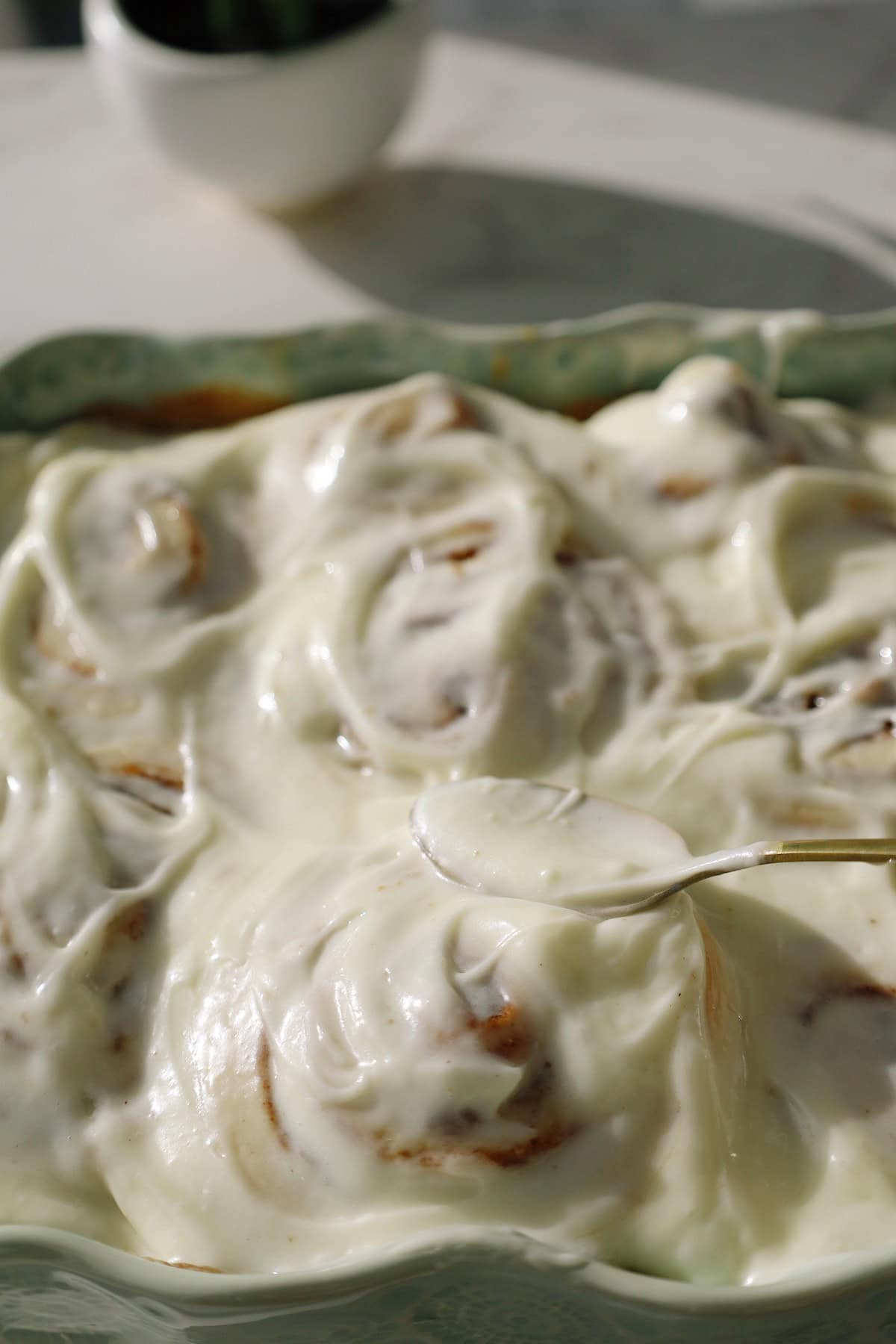
My Secrets for the Perfect Homemade Cinnamon Rolls
Don’t rush the proofing. Give the dough the full time it needs to rise — that’s where all the softness and fluffiness come from. Under-proofing will leave you with heavy rolls instead of pillowy ones.
Warm your ingredients. Cold butter or milk can slow down yeast activity. Room-temperature ingredients help everything combine smoothly and make the dough rise more evenly.
Roll evenly. When you roll out the dough, aim for an even thickness so each cinnamon roll bakes consistently and stays soft all around (no tough edges).
Use softened butter for the filling. Too melted and it’ll ooze right out — you want it spreadable so the brown sugar and cinnamon stick to the dough beautifully.
Pour the cream before baking. That step might seem small, but it’s game-changing. The heavy cream seeps into the rolls as they bake, giving them that rich, melt-in-your-mouth texture.
Don’t overbake. Once the tops turn golden and the center feels set (not doughy, not dry), pull them out. Remember, they keep cooking a little as they cool.
Frost while warm. The frosting melts slightly and fills every swirl, giving you that glossy, bakery-style finish. If you wait too long, it just sits on top instead of becoming one with the roll.
Use bread flour + all-purpose flour. It’s not just a flex — this combo really is the secret to that perfect balance of structure and softness. All bread flour = too chewy, all all-purpose = too soft. Together, they’re unbeatable.
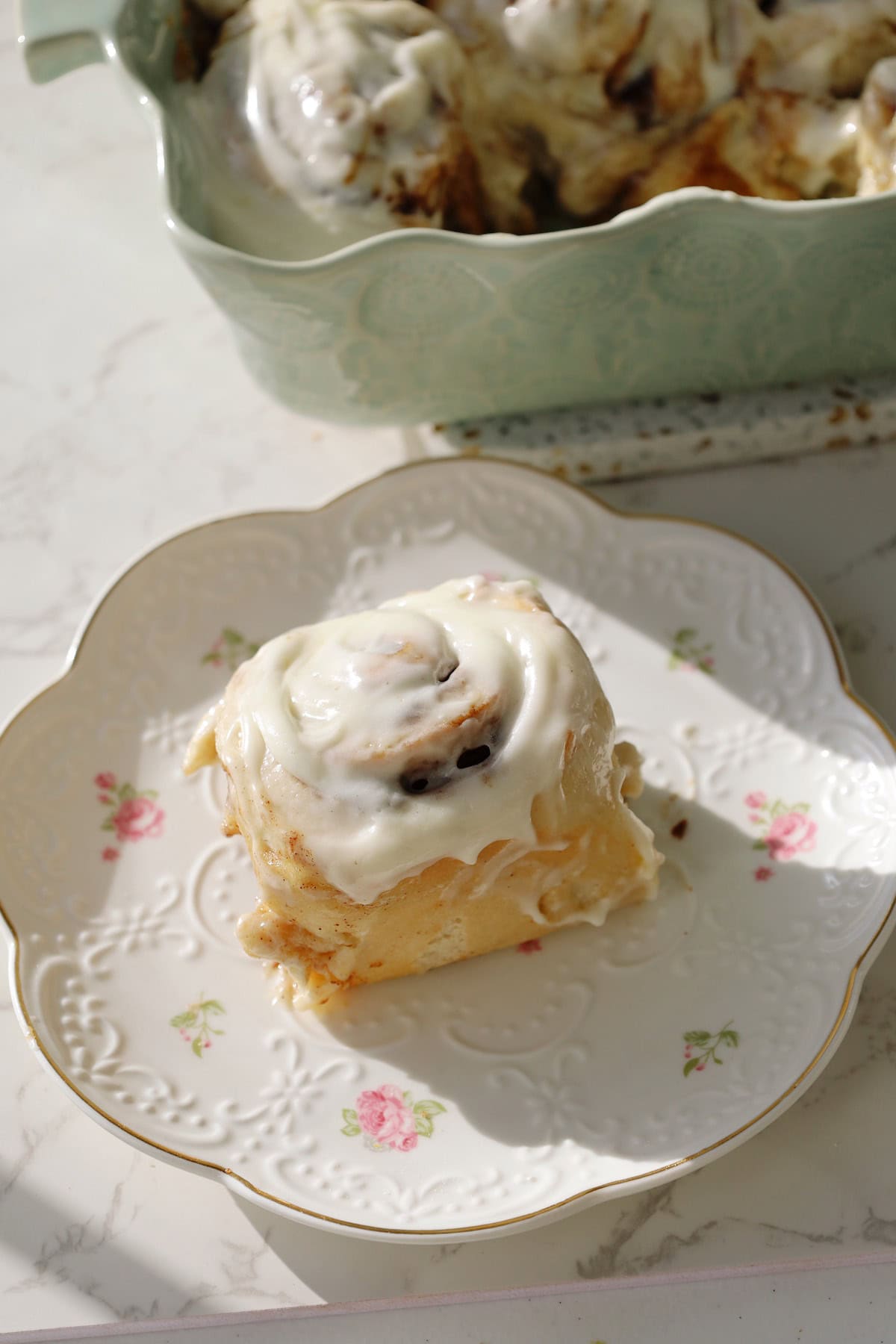
FAQ
This often happens if the dough did not rise enough (either first proof or after shaping), if the flour ratio was off (too much flour or only all-purpose flour without enough bread flour), or if the oven temperature was too high causing the outside to set before the interior had a chance to swell. Also, check that your yeast is fresh and active.
Absolutely. After shaping, cover the pan tightly and refrigerate overnight. The next morning, bring the rolls to room temperature, let them rise until puffy, and bake as usual. You can also freeze them (baked or unbaked) for up to a month.
They should be golden on top and soft but set in the center. A thermometer inserted in the middle should read around 190°F. If the tops are browning too quickly but the centers aren’t done, tent with foil for the last few minutes of baking.
Yes! Just skip the activation step — mix it directly into the dry ingredients. Your proof times may be slightly shorter, so keep an eye on the dough rather than the clock.
Homemade Cinnamon Rolls (Extra Soft and Fluffy!)
Ingredients
Rolls:
- 1 cup whole milk
- 1/3 cup sour cream
- 1/4 cup brown sugar
- 1 packet active dry yeast, 2.5 tsp
- 1 stick unsalted butter
- 1 tsp salt
- 2 eggs
- 1 tsp vanilla bean paste
- 2 cups all purpose flour
- 2.5 cups bread flour
Cinnamon Filling:
- 1/2 stick salted butter
- 1 cup brown sugar
- 2 tbsp cinnamon
Cream cheese frosting:
- 8 ounces cream cheese
- 1/2 stick salted butter, 2 ounces
- 1 tsp bourbon vanilla extract
- 1 tbsp heavy whipping cream
- 1.5 c powdered sugar
Other:
- 1/4 cup heavy cream on top, warmed
Instructions
- Activate yeast: Add 1 tablespoon white sugar to the milk and microwave for 40–45 seconds, until lightly warm but not hot. Stir in the yeast, mix well, and let sit until frothy, about 1–2 minutes.
- Make the dough: In a large bowl, combine bread flour and all-purpose flour. Add the frothy milk mixture, sour cream, melted butter, brown sugar, eggs, vanilla, and salt. Mix until combined, then knead until smooth, soft, and slightly tacky.
- First rise: Transfer the dough to a greased bowl, cover, and let rise in a warm spot until doubled in size, about 1 hour.
- Make the filling: In a small bowl, mix melted salted butter with brown sugar and cinnamon until it forms a thick, spreadable paste.
- Roll and fill: Roll the dough into a large rectangle. Spread the cinnamon-butter mixture evenly over the surface, then roll it up tightly and slice into equal rolls (about 10).
- Second rise: Arrange rolls in a greased 9×13″ baking dish, cover, and let rise again until puffy, about 30 minutes.
- Cream pour: Warm the heavy cream slightly (microwave for about 20 seconds) and pour over the rolls just before baking.
- Bake: Bake at 350°F for 30-35 minutes, or until golden and the centers are set but still soft. Tent with foil if browning too quickly.
- Frosting: Beat cream cheese and butter until smooth. Add vanilla, heavy cream, and powdered sugar, mixing until creamy and spreadable. Let the rolls cool for about 10-15 minutes before frosting. They should still be warm so the icing melts into every swirl.
Notes
Nutrition
Nutrition information is automatically calculated, so should only be used as an approximation.






Amazing recipe, I made this a few days ago and it was finished IN MINUTES. The roll was very pillow-y and the cinnamon mix was just right. This recipe was not too sweet either.