Few pasta dishes are as iconic — or as simple — as pasta pomodoro. This Italian classic is all about balance: sweet San Marzano tomatoes, fragrant garlic, fresh basil, and high-quality olive oil coming together to create a sauce that’s both fresh and comforting. It’s proof that with just a handful of ingredients, you can create a pasta night that feels restaurant-worthy.
If you love easy but flavor-packed pastas, you’ll also want to check out my Creamy Gochujang Pasta, Green Goddess Pasta, and Creamy Pumpkin Pasta! And if you’re looking for a little something sweet after dinner, pair this pasta with my Easy Masala Chai Tiramisu Recipe!
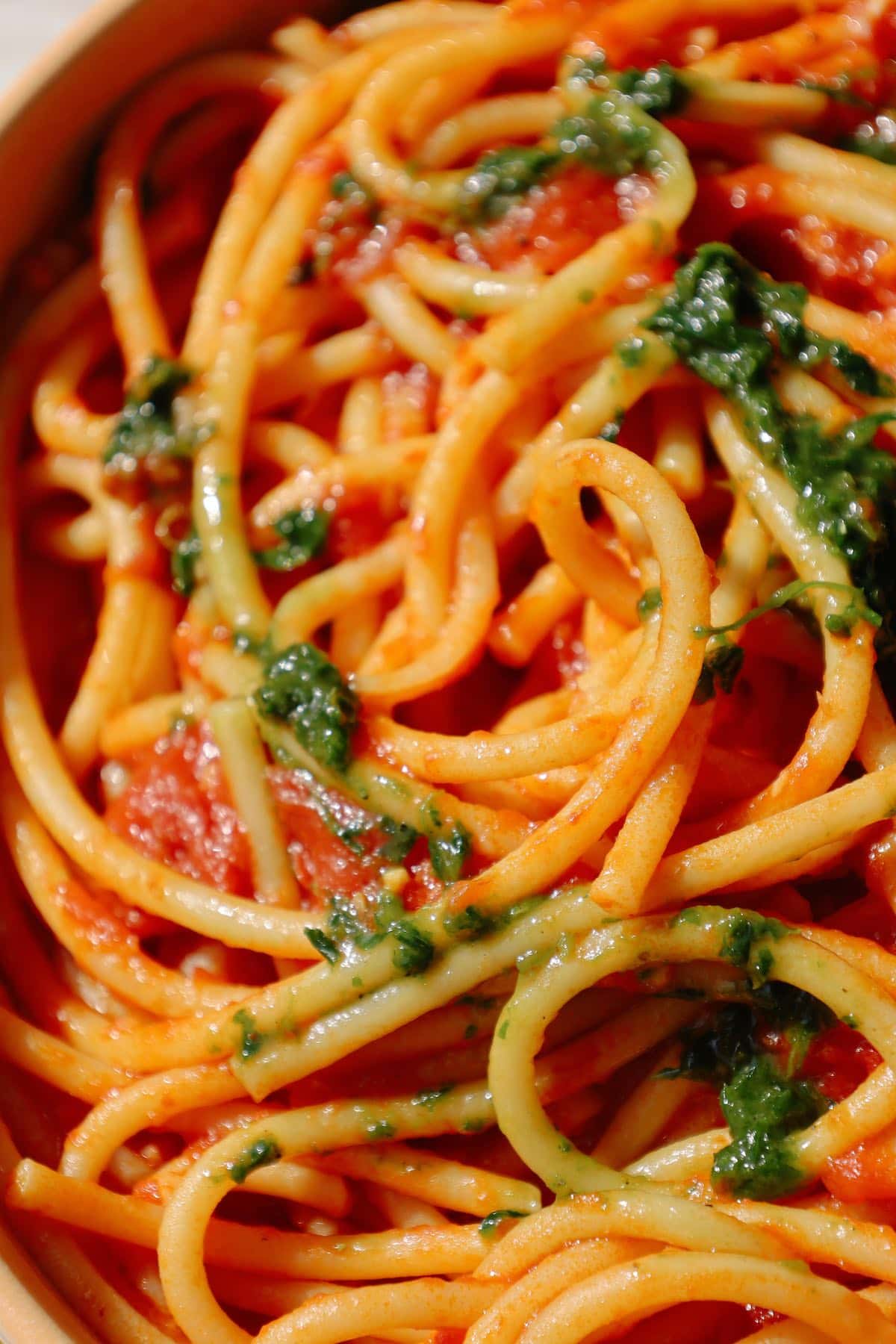
Quick Look: Pomodoro Pasta Recipe
✅ Recipe Name: Pomodoro Pasta with Balsamic Chimichurri
🕒 Ready In: About 20 minutes
👪 Serves: 4
🥣 Main Ingredients: San Marzano tomatoes, pasta, garlic, olive oil, fresh basil, parsley, balsamic vinegar, and Parmesan
👌 Difficulty: Easy. Simmer San Marzano tomatoes with garlic and basil for a simple homemade pomodoro sauce. Toss with pasta and finish with fresh balsamic chimichurri and Parmesan.
SUMMARIZE & SAVE THIS CONTENT ON:
Table of Contents
A Fun Twist on a Classic: Adding Balsamic Chimichurri
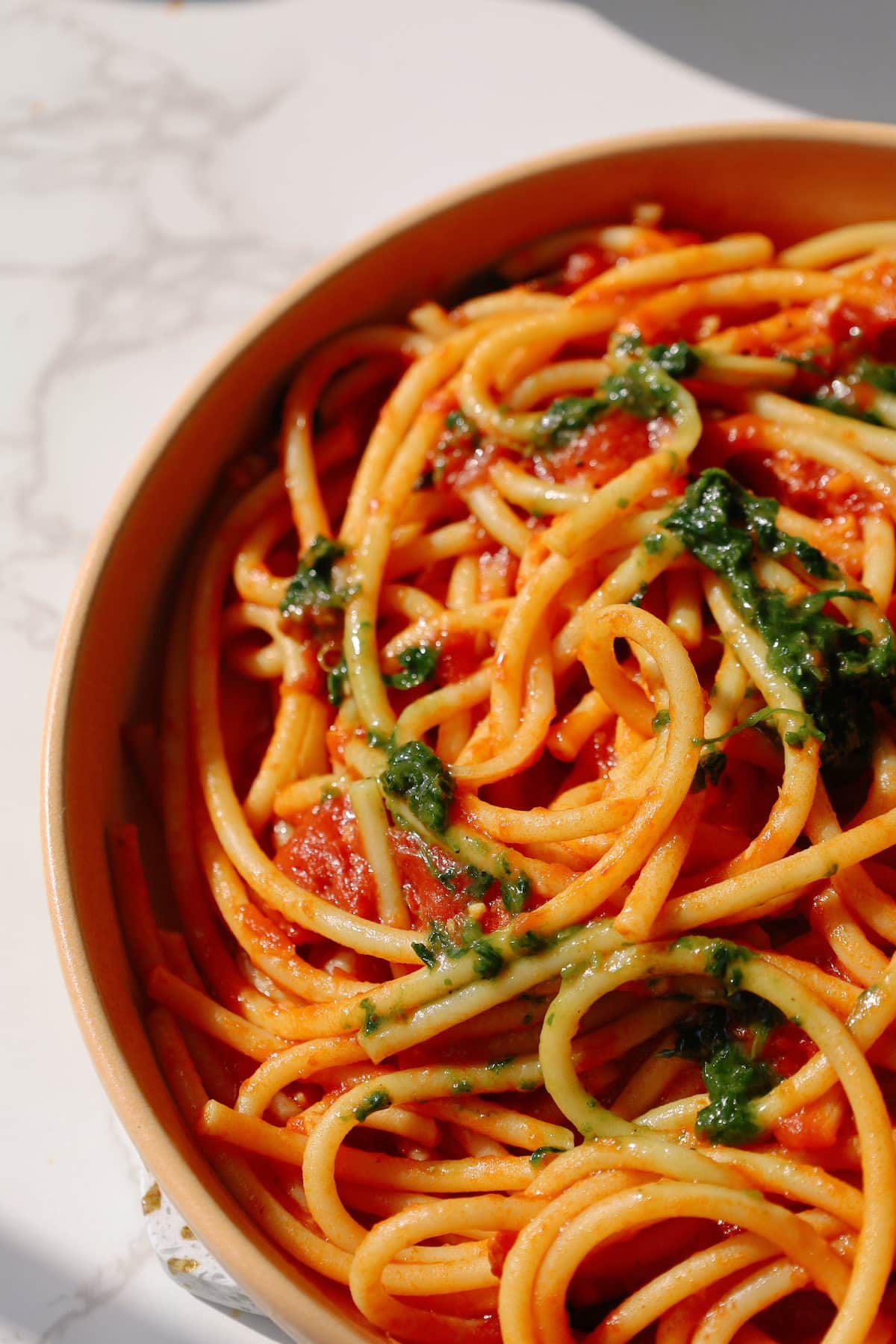
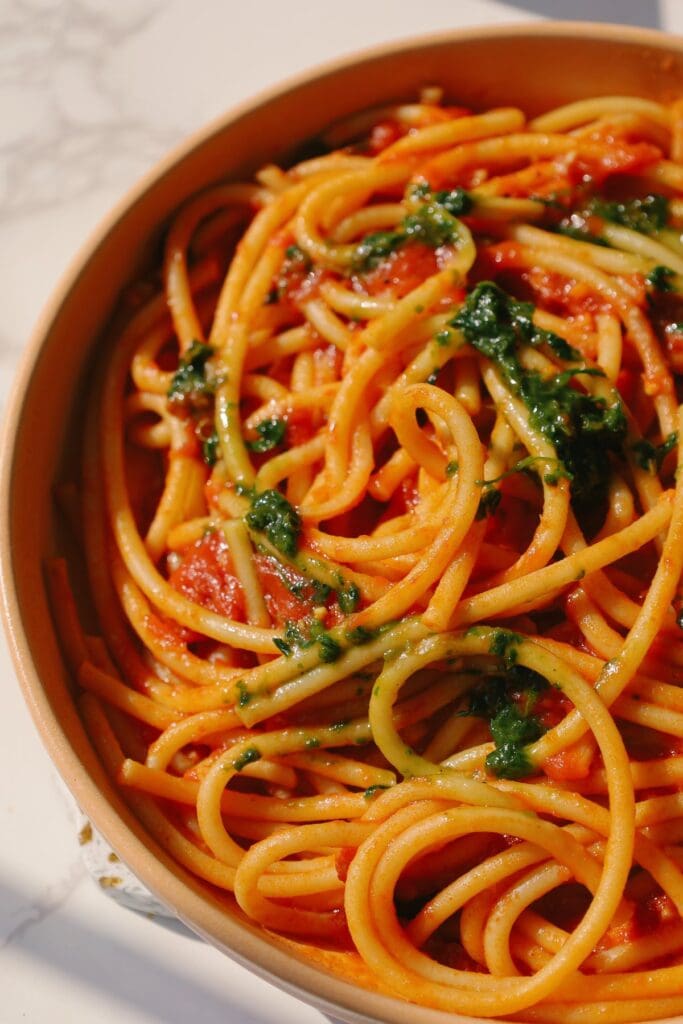
Traditional pasta pomodoro is all about simplicity, but I couldn’t resist adding a little twist: a quick balsamic chimichurri. The fresh parsley, garlic, and tangy balsamic cut through the sweetness of the tomato sauce and give the dish an herby brightness that makes every bite more dynamic. The balsamic chimichurri in this pasta is a slightly sweeter, tangier variation, but if you’re looking for a more classic version, try my easy chimichurri sauce made with fresh herbs, garlic, and olive oil.
It’s not traditional, but it works beautifully — the chimichurri swirled into pomodoro sauce adds depth, freshness, and just enough acidity to keep the pasta light while still indulgent (just make sure to add it sparingly due to it’s strong flavor). Think of it as Italy meets Argentina in the coziest way possible. For another simple tomato-forward pasta, try my cherry tomato pasta made with juicy tomatoes and a quick, flavorful sauce.
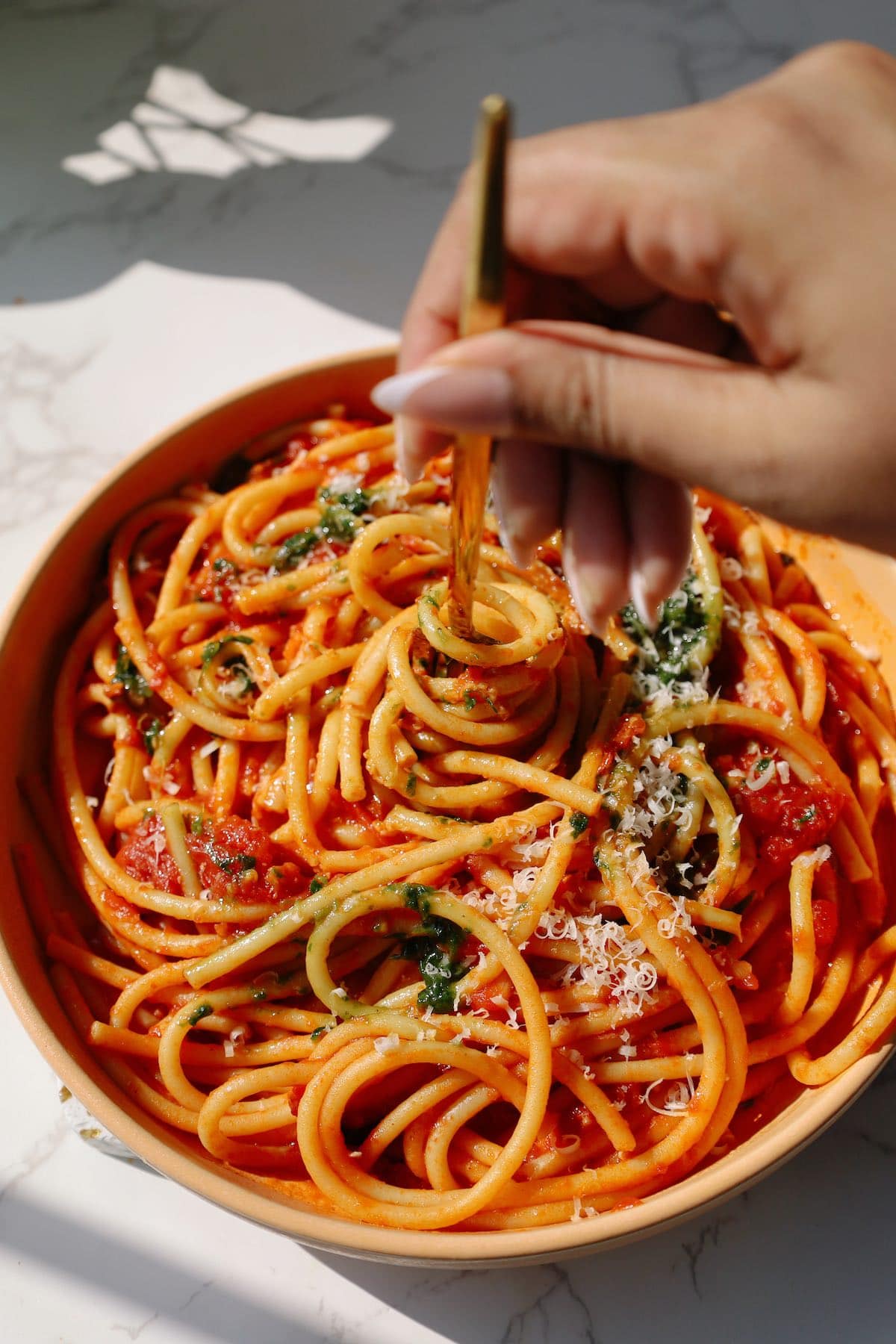
Key Ingredients
San Marzano Tomatoes: The gold standard for pomodoro. These tomatoes are naturally sweet, low in acidity, and break down into a silky sauce. Using high-quality canned tomatoes is what sets great pomodoro apart from average tomato pasta.
Garlic and Olive Oil: Garlic builds the savory backbone of the sauce, while olive oil carries flavor and adds richness. Extra virgin olive oil makes a noticeable difference here.
Fresh Basil: Signature to pomodoro, basil adds a fresh, slightly peppery note that brightens the tomato base.
Pasta of Choice: Spaghetti and bucatini are classics, but penne or rigatoni work well if you prefer short pasta. The key is to cook it al dente so it can finish in the sauce.
Balsamic Chimichurri: Parsley, balsamic vinegar, garlic, and olive oil blended into a rustic sauce. The balsamic vinegar adds a gentle sweetness and acidity that balances the richness of the pomodoro.
Salt, Pepper, and Parmesan: Seasoning is crucial — salt and pepper bring everything into balance, while Parmesan (or Pecorino) adds salty umami to finish.
For more weekly dinner ideas, check out all of my main course recipes!
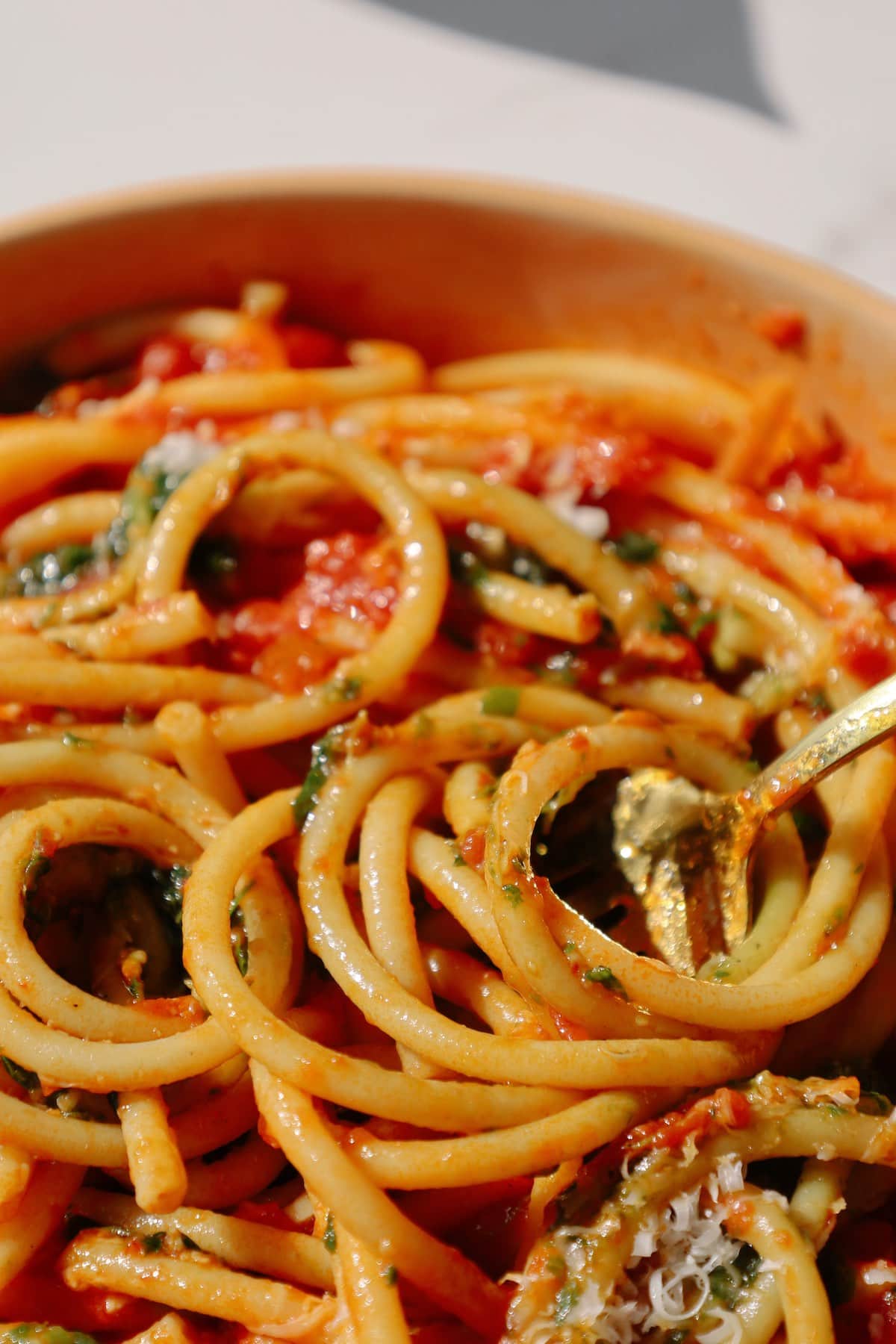
How to Make Pasta Pomodoro
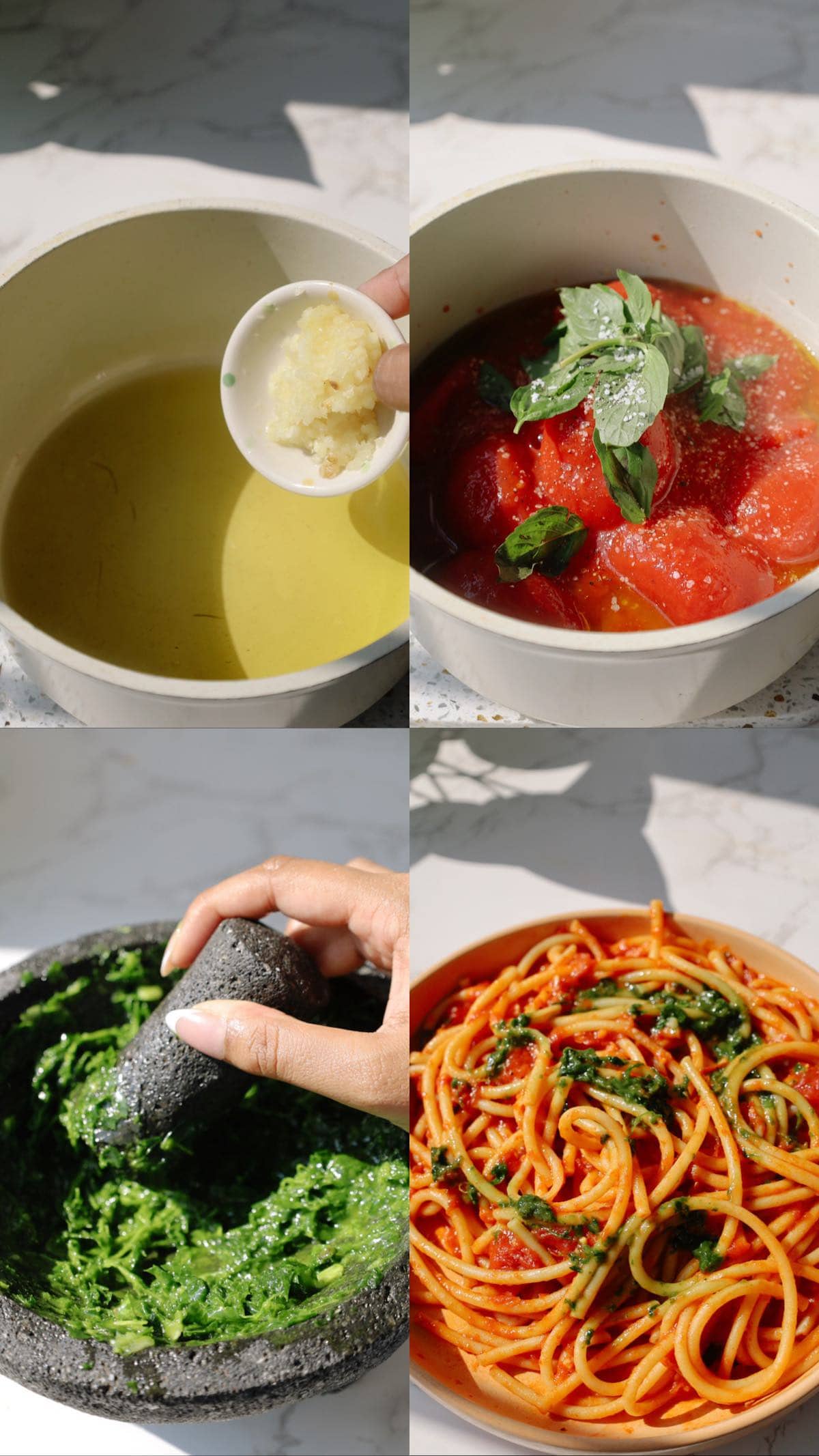
- Warm olive oil in a skillet, sauté garlic until fragrant.
- Add San Marzano tomatoes, crush lightly, and simmer until thickened.
- Season with salt, pepper, and basil leaves. Add sugar if needed to balance acidity.
- Cook pasta al dente, reserve pasta water, and toss pasta in the sauce.
- Top with Parmesan and a light drizzle of balsamic chimichurri before serving.
My Tips as a Professional Recipe Developer:
Using the wrong tomatoes: Not all canned tomatoes are equal. Regular diced or stewed tomatoes can be watery and too acidic. San Marzano (or a high-quality Italian plum tomato) is worth it — they break down into a naturally sweet, smooth sauce.
Overcooking the garlic: Garlic burns quickly and turns bitter. Keep the heat moderate and add the tomatoes as soon as the garlic turns golden, not brown.
Forgetting pasta water: Pasta water is liquid gold. Its starch emulsifies the sauce, making it cling to the noodles instead of sliding off. Add it gradually when tossing the pasta to create a silky, restaurant-style finish.
Not seasoning properly: Pomodoro relies on balance. Always taste the sauce at the end — a pinch of sugar can correct tart tomatoes, while finishing with Parmesan or Pecorino adds salty umami.
Pro Tip — chimichurri matters: Don’t skip the balsamic chimichurri. Its acidity cuts through the richness of the sauce and balances flavors. Making it in a molcajete or mortar and pestle gives it a rustic texture that blends beautifully into the pasta.
FAQ
It’s a classic Italian pasta dish made with tomatoes, garlic, olive oil, and basil. “Pomodoro” means tomato in Italian, and the sauce is known for being fresh, light, and simple.
Start with San Marzano tomatoes, which are naturally sweeter. If the sauce still tastes sharp, stir in ½ teaspoon of sugar or a splash of balsamic vinegar to balance the acidity. Simmering gently instead of boiling also prevents bitterness.
Spaghetti and bucatini are classic, but rigatoni, penne, or shells are also great. The key is cooking pasta al dente and finishing it in the sauce so it absorbs flavor and achieves that restaurant-style finish.
Pasta Pomodoro (With Balsamic Chimichurri)
Ingredients
Pomodoro Sauce
- 3 tbsp extra virgin olive oil
- 2 tbsp chopped garlic
- 1 can whole peeled San Marzano tomatoes, (12 ounces)
- A small handful of fresh basil leaves
- Salt and Black pepper to taste
- 1/2 tsp sugar, (optional, to balance tartness)
- Parmesan cheese, (for serving)
Balsamic Chimichurri
- 1 cup parsley leaves, (loosely packed)
- 1/4 cup olive oil
- 2 garlic cloves
- 1 tbsp balsamic vinegar
- Salt and pepper to taste
Other
- 7 ounces pasta, (spaghetti, bucatini, or pasta of choice)
Instructions
- Sauté the garlic: Heat olive oil in a large skillet over medium heat. Add chopped garlic and cook until fragrant and lightly golden, about 1–2 minutes.
- Add tomatoes: Pour in the San Marzano tomatoes with their juices. Crush them with a spoon or masher directly in the pan. Season with salt and pepper.
- Simmer the sauce: Let the tomatoes cook uncovered for 20–25 minutes, stirring occasionally, until the sauce thickens and reduces slightly. Taste and adjust with a pinch of sugar if the tomatoes are too tart.
- Cook the pasta: While the sauce simmers, cook pasta in salted boiling water until just shy of al dente. Reserve about 1 cup of pasta water.
- Finish the sauce: Stir in basil leaves. Add the cooked pasta directly to the skillet with the sauce, tossing with splashes of pasta water until the noodles are coated and glossy.
- Top with chimichurri: Serve hot, garnished with Parmesan cheese and a light drizzle of of balsamic chimichurri over each bowl.
Notes
Nutrition
Nutrition information is automatically calculated, so should only be used as an approximation.