If you’ve ever craved that comforting, saucy noodle dish from your favorite Chinese takeout spot, you’re in the right place. My homemade lo mein hits all the right notes—slurp-worthy egg noodles, crunchy veggies, garlic, and a sauce that balances sweet, spicy, and umami. Whether you’re cooking for yourself, your family, or impressing dinner guests, I promise this recipe will make you ditch the phone for takeout.
If you love noodle dishes, try creamy gochujang pasta recipe, cold sesame noodles, or my spicy peanut noodles.
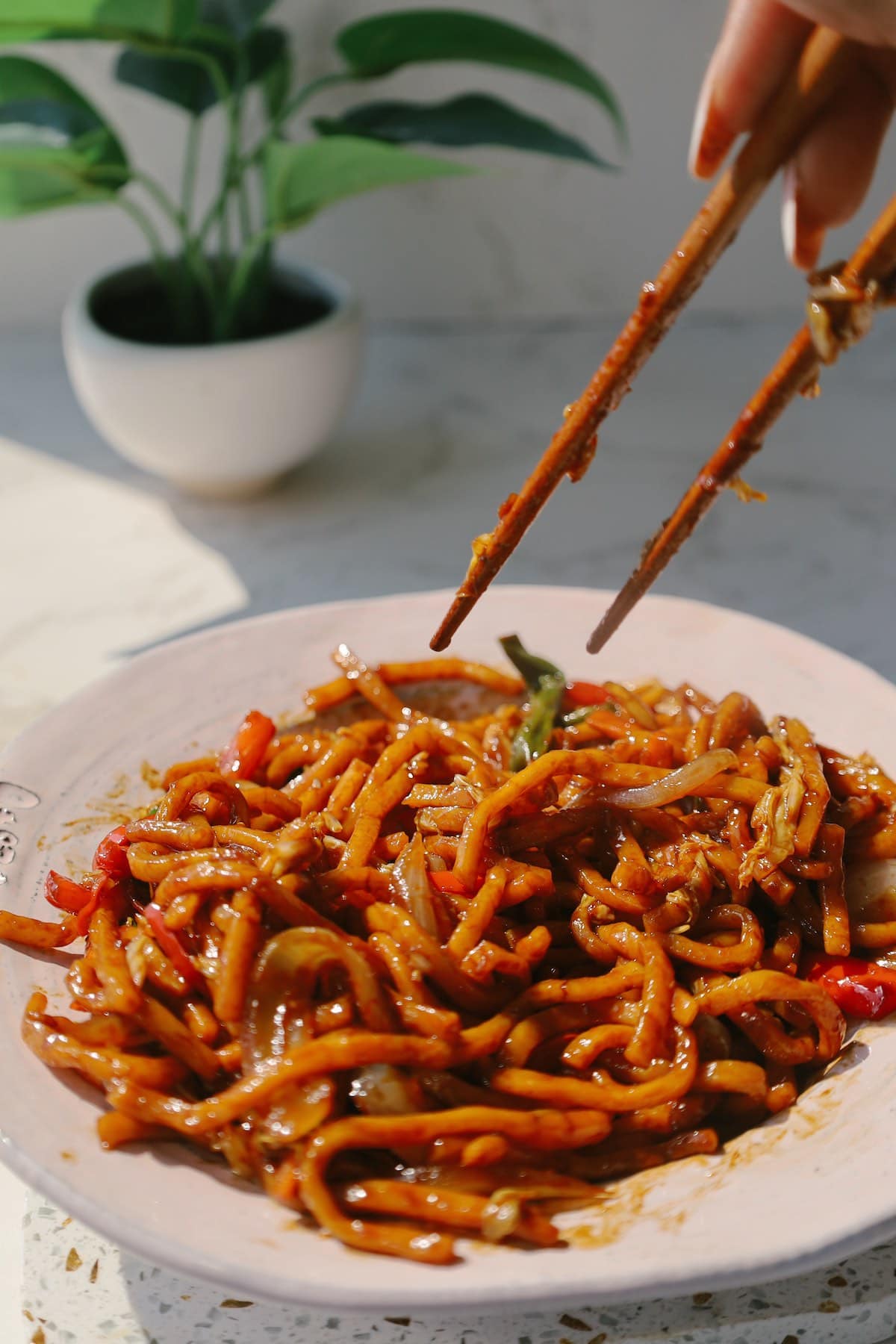
Quick Look: Vegetable Chow Mein
✅ Recipe Name: Vegetable Chow Mein
🕒 Ready In: About 20 minutes
👪 Serves: 2
🥣 Main Ingredients: egg noodles, bell peppers, carrots, cabbage, onions, dark soy sauce, vegetarian oyster sauce, garlic, and sesame oil
👌 Difficulty: Easy. Cook the noodles, stir-fry the vegetables with garlic, then toss everything together in a homemade savory chow mein sauce.
SUMMARIZE & SAVE THIS CONTENT ON:
Table of Contents
What Is Lo Mein?
Lo mein (Cantonese 撈麵, Mandarin lāo miàn) literally means “stirred noodles.” Traditionally, it refers to cooked wheat noodles tossed with sauce, vegetables, and sometimes protein. In many Asian cultures, noodles symbolize longevity and good fortune, which is why long, unbroken noodles are served at birthdays or holidays. A plate of saucy lo mein isn’t just dinner—it’s a bowl of comfort and tradition.
In Chinese-American cuisine, it became a beloved takeout staple, often contrasted with chow mein, which is fried until crisp. If you want to try that version next, my vegan chow mein is a quick, savory takeout-style favorite.
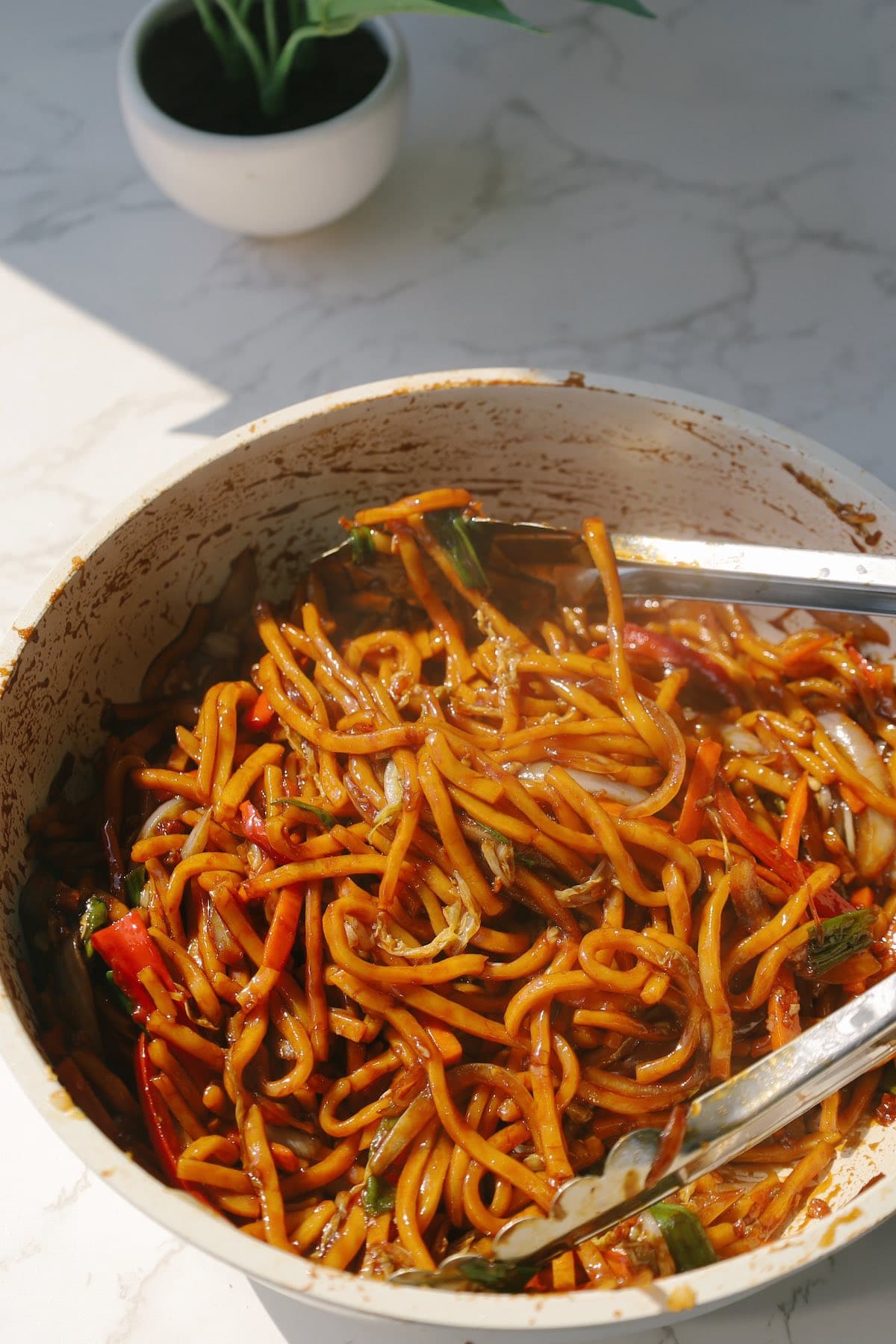
How Is Lo Mein Different from Other Noodle Dishes?
People often confuse lo mein with other noodle dishes, but the cooking method and texture set it apart.
- Lo Mein vs. Chow Mein: Lo mein noodles are boiled, then tossed in sauce, giving them a soft and saucy texture. Chow mein is stir-fried or pan-fried, making the noodles drier and slightly crispy.
- Lo Mein vs. Mei Fun: Mei fun uses thin rice noodles, which are lighter and more delicate compared to the chewy wheat egg noodles in lo mein.
- Lo Mein vs. Ramen: Ramen is Japanese and served in broth, while lo mein is stir-fried and sauce-coated with no soup.
Lo mein is your go-to if you want chewy noodles coated in a savory sauce rather than crispy or broth-based noodles.
Key Ingredients
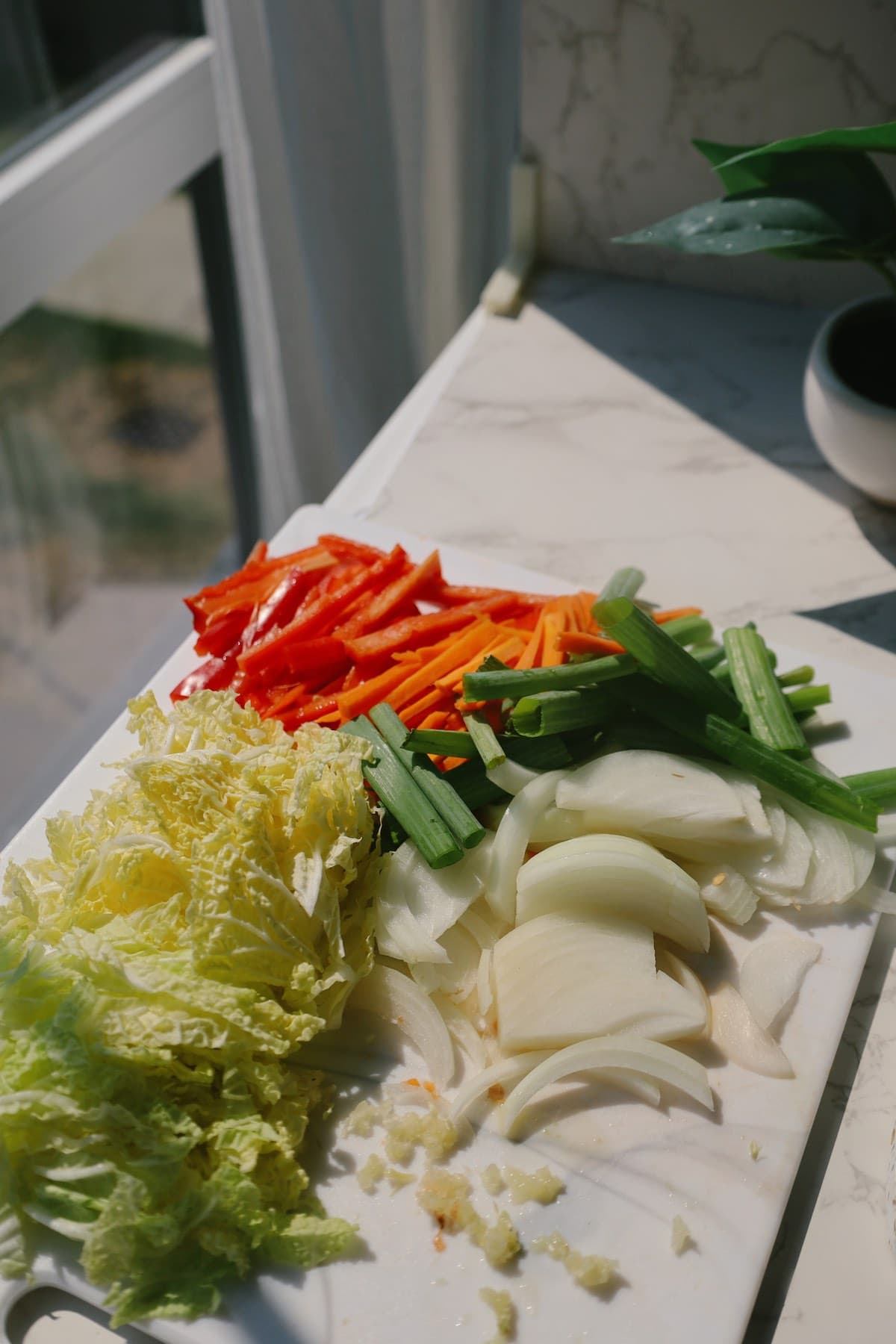
Vegetables: Bell pepper, carrot, onion, cabbage, and green onions create texture, color, and freshness.
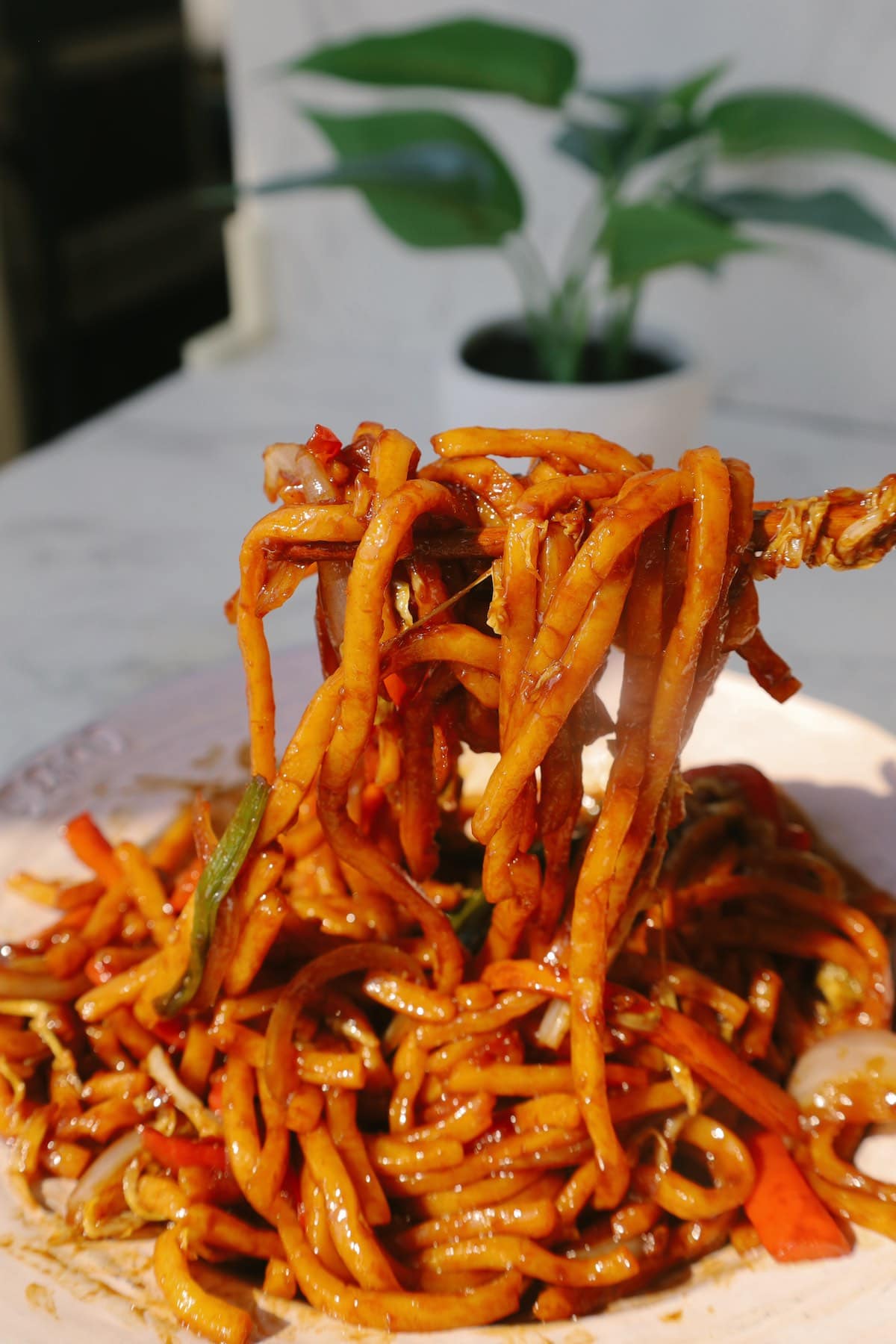
Egg noodles: Fresh or dried egg noodles work. They give the classic chewy bite and hold up beautifully to the sauce. If you can’t find them, spaghetti or wheat noodles are solid substitutes.
Dark soy sauce: Adds depth of color and flavor, richer than regular soy.
Vegetarian oyster sauce: Provides that signature savory umami note.
Brown sugar: Balances the saltiness and heat in the sauce.
Rice vinegar: Adds brightness and keeps the sauce from feeling heavy.
Sriracha: Brings a subtle kick of spice.
White pepper: A gentle warmth that’s more delicate than black pepper.
Garlic: Builds aromatic flavor at the base of the dish.
Sesame oil: Adds nutty fragrance and should be used as a finishing touch.
How to Make Lo Mein
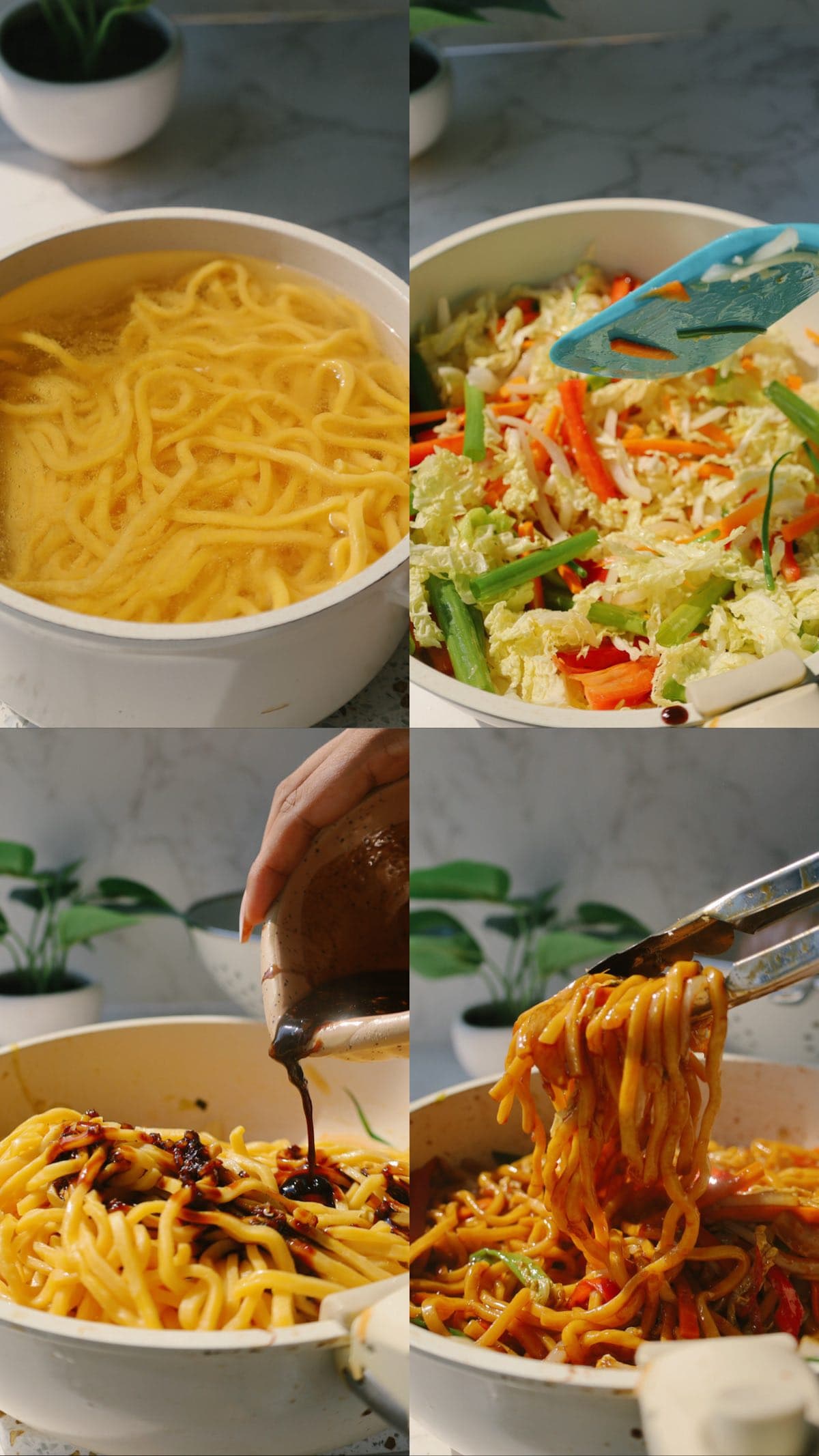
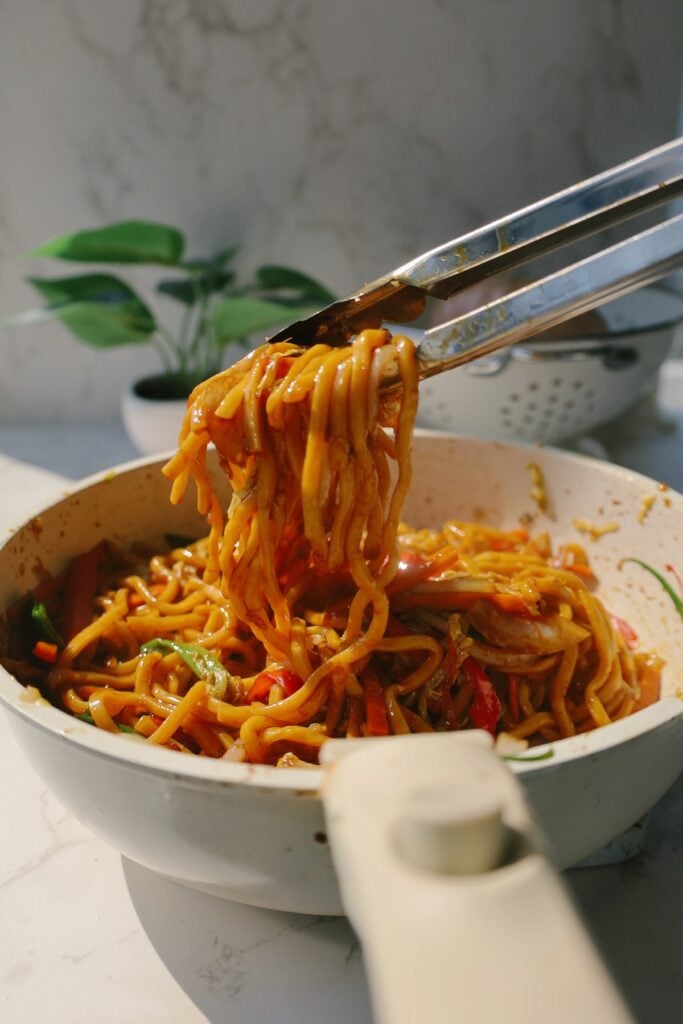
- Cook egg noodles until just al dente, drain, rinse, and set aside.
- Whisk together the sauce ingredients in a bowl.
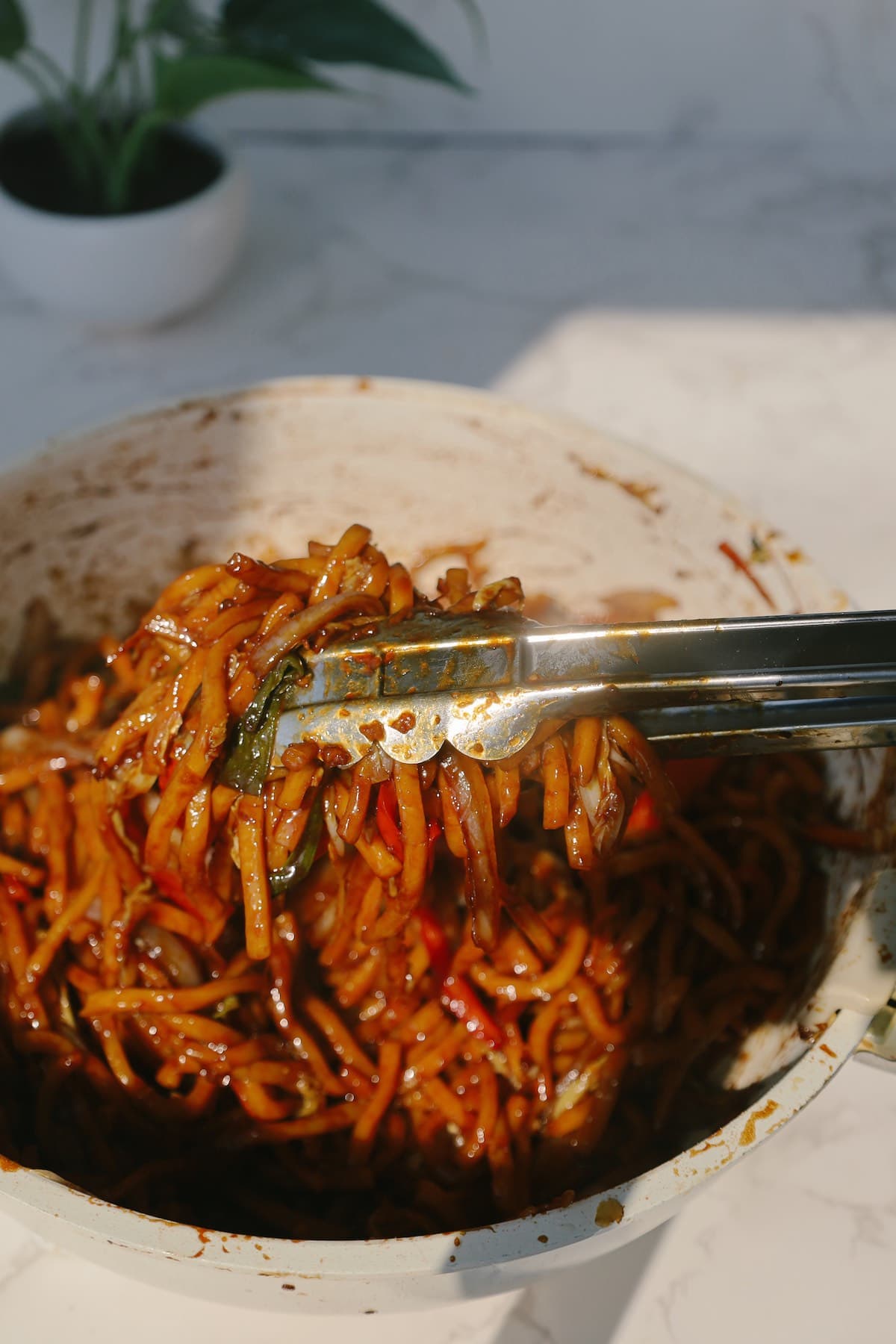
- Heat oil in a wok or large skillet, then stir fry garlic, onion, bell pepper, carrot, and cabbage until tender-crisp.
- Add noodles and pour in the sauce. Toss over high heat until everything is evenly coated.
- Stir in green onions, adjust seasoning, and serve hot.
Common Mistakes to Avoid + Pro Tips
- Don’t overcook the noodles. They’ll continue to cook when stir-fried, so keep them firm.
- Always rinse and drain noodles to avoid clumping.
- Use a large enough wok or skillet. If you overcrowd, veggies steam instead of stir fry.
- Keep heat high when tossing noodles with sauce—this gives that restaurant-style flavor.
- Save sesame oil for finishing, not frying, since it burns easily.
Pro tips:
A splash of broth or noodle water can rescue a dry lo mein.
Fresh egg noodles give the best texture, but spaghetti works in a pinch.
Add tofu, mushrooms, or your protein of choice for a heartier version.
Serving Suggestions
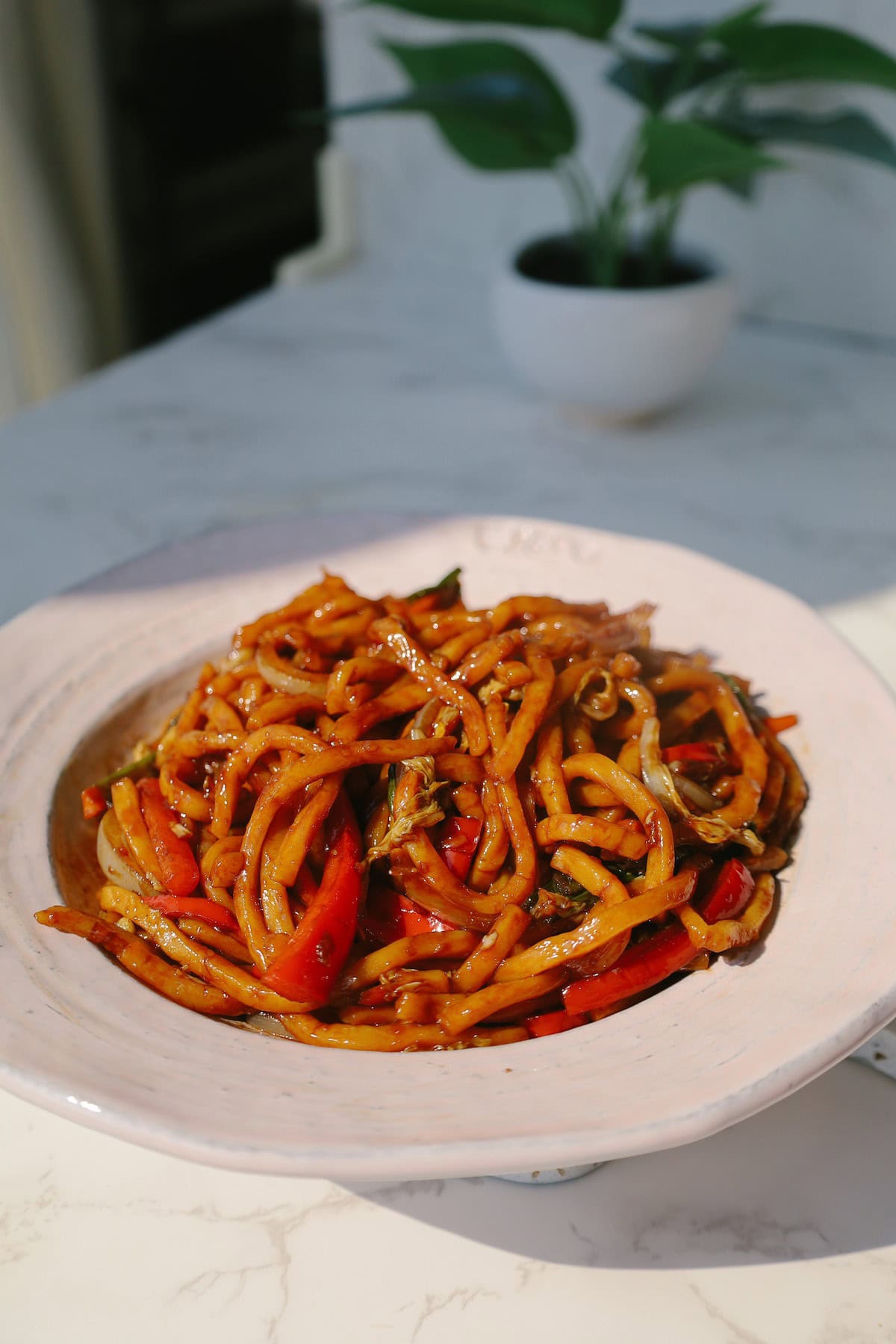
Pair your lo mein with crispy fried spring rolls, sweet and sour tofu, pan-fried dumplings, or sautéed bok choy. It’s also the perfect base dish if you’re making a larger spread of Chinese takeout classics.
Want more noodle ideas? Check out my noodle archive!
FAQ
Fresh egg noodles are ideal, but dried egg noodles or even spaghetti will work if cooked al dente and rinsed.
Rinse cooked noodles under cold water and drain thoroughly. Toss with a touch of oil if storing before stir frying.
Easy Lo Mein Recipe
Ingredients
Sauce
- 4 tbsp dark soy sauce
- 1 tbsp sriracha
- 2 tbsp vegetarian oyster sauce
- 2 tbsp brown sugar
- 1.5 tsp rice vinegar
- 1/4 tsp white pepper powder
- 2 tsp minced garlic
- 1 tsp sesame oil
Other
- 1 lb egg noodles, (20 ounces)
- 2 tbsp oil
- 1/2 red bell pepper
- 1/2 large carrot
- 1/2 yellow onion
- 1 cup kappa cabbage shredded
- 1/2 bunch of green onions
Instructions
- Prepare the noodles: Bring water to a boil and cook egg noodles until just al dente. Drain, rinse under cold water, and let them sit to remove excess starch.
- Mix the sauce: In a bowl, whisk together dark soy sauce, vegetarian oyster sauce, brown sugar, rice vinegar, sriracha, white pepper, garlic, and sesame oil.
- Stir fry the vegetables: Heat oil in a large wok over high heat. Add garlic and cook until fragrant. Stir in onion, carrot, and bell pepper, cooking until slightly softened. Add the shredded cabbage and cook until crisp-tender.
- Combine noodles and sauce: Add the drained noodles to the wok. Pour in the sauce and toss vigorously so every strand is coated. Let the sauce reduce slightly to cling to the noodles.
- Finish: Mix in chopped green onions, taste, and adjust seasoning. Add an extra drizzle of sesame oil before serving if desired.
Notes
Nutrition
Nutrition information is automatically calculated, so should only be used as an approximation.