If you ask me, there’s nothing better than a cozy bowl of pasta that tastes like it came straight out of a fancy restaurant—but was secretly made in under 20 minutes in your own kitchen. That’s exactly what this mushroom miso pasta delivers: earthy mushrooms, a luscious creamy sauce, and a kick of umami from white miso paste. It’s the kind of dish that feels both comforting and elevated, and it’s the one I turn to when I want pasta night to feel just a little extra special.
And if you love cozy dinners, you’ll also enjoy my creamy pumpkin pasta, spicy rigatoni with burrata, and pomodoro with chimichurri! And for something simple, you can’t go wrong with a classic cherry tomato pasta!
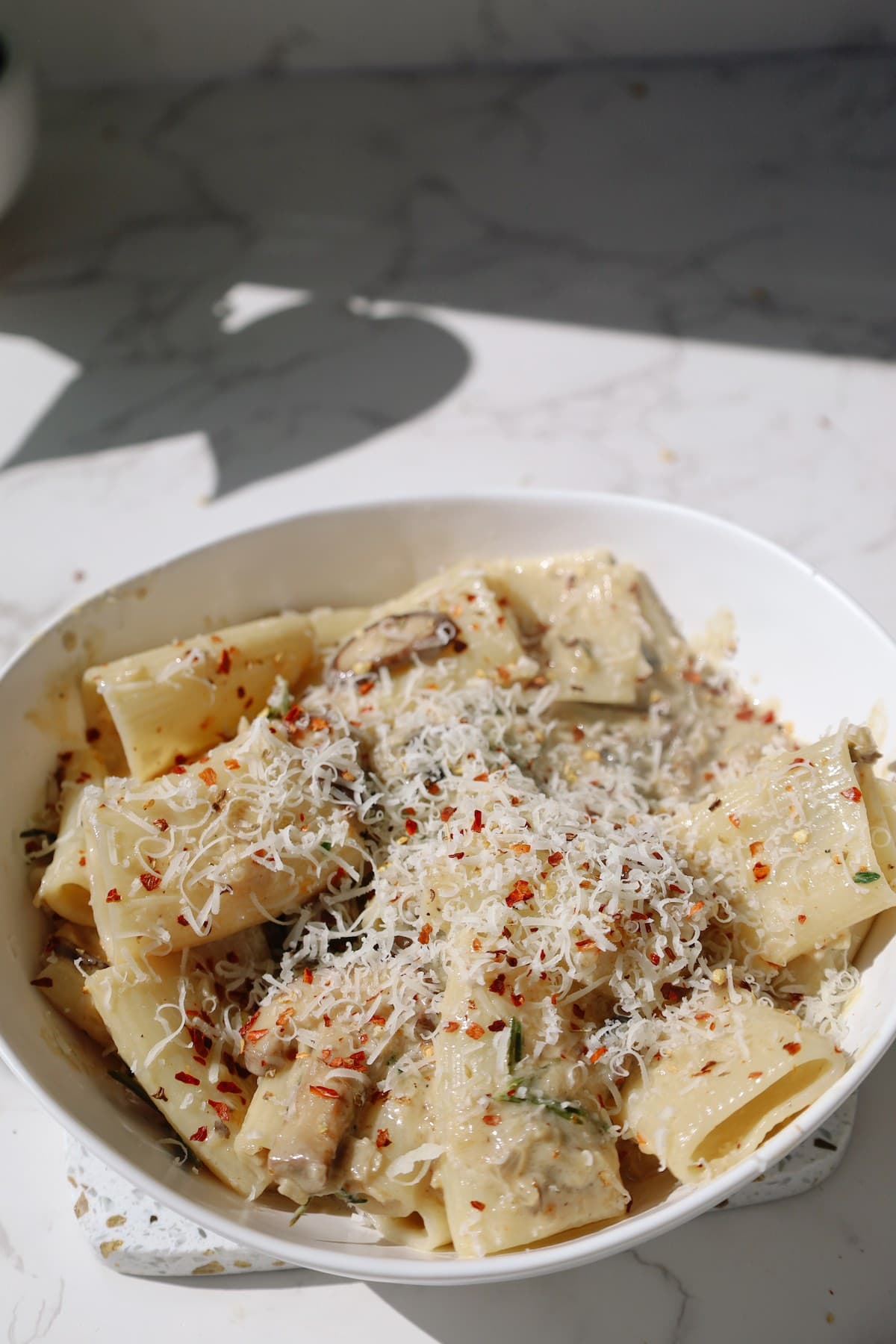
Quick Look: Mushroom Miso Pasta
✅ Recipe Name: Creamy Mushroom Miso Pasta
🕒 Ready In: About 20 minutes
👪 Serves: 2
🥣 Main Ingredients: shiitake, oyster and cremini mushrooms, white miso paste, shallots, garlic, soy sauce, heavy cream, Parmesan, and pasta
👌 Difficulty: Easy. A rich, creamy mushroom pasta made with sautéed gourmet mushrooms, savory white miso, and a silky Parmesan cream sauce. Packed with umami flavor and ready in about 20 minutes.
SUMMARIZE & SAVE THIS CONTENT ON:
Table of Contents
What is Mushroom Miso Pasta?
Mushroom miso pasta is a creamy, umami-packed dish that blends the richness of Italian-inspired cream sauces with the deep savory notes of Japanese miso. White miso paste, which is milder and slightly sweet compared to red miso, balances beautifully with parmesan, cream, and sautéed mushrooms. The result? A sauce that’s velvety, nutty, and slightly tangy—clinging perfectly to every strand of pasta.
This recipe isn’t traditional Italian or Japanese—it’s a fusion dish that combines the best of both worlds. And because miso is a fermented soybean paste, it adds not only flavor but also gut-friendly probiotics (though cooking diminishes some of those benefits, the flavor payoff is unbeatable).
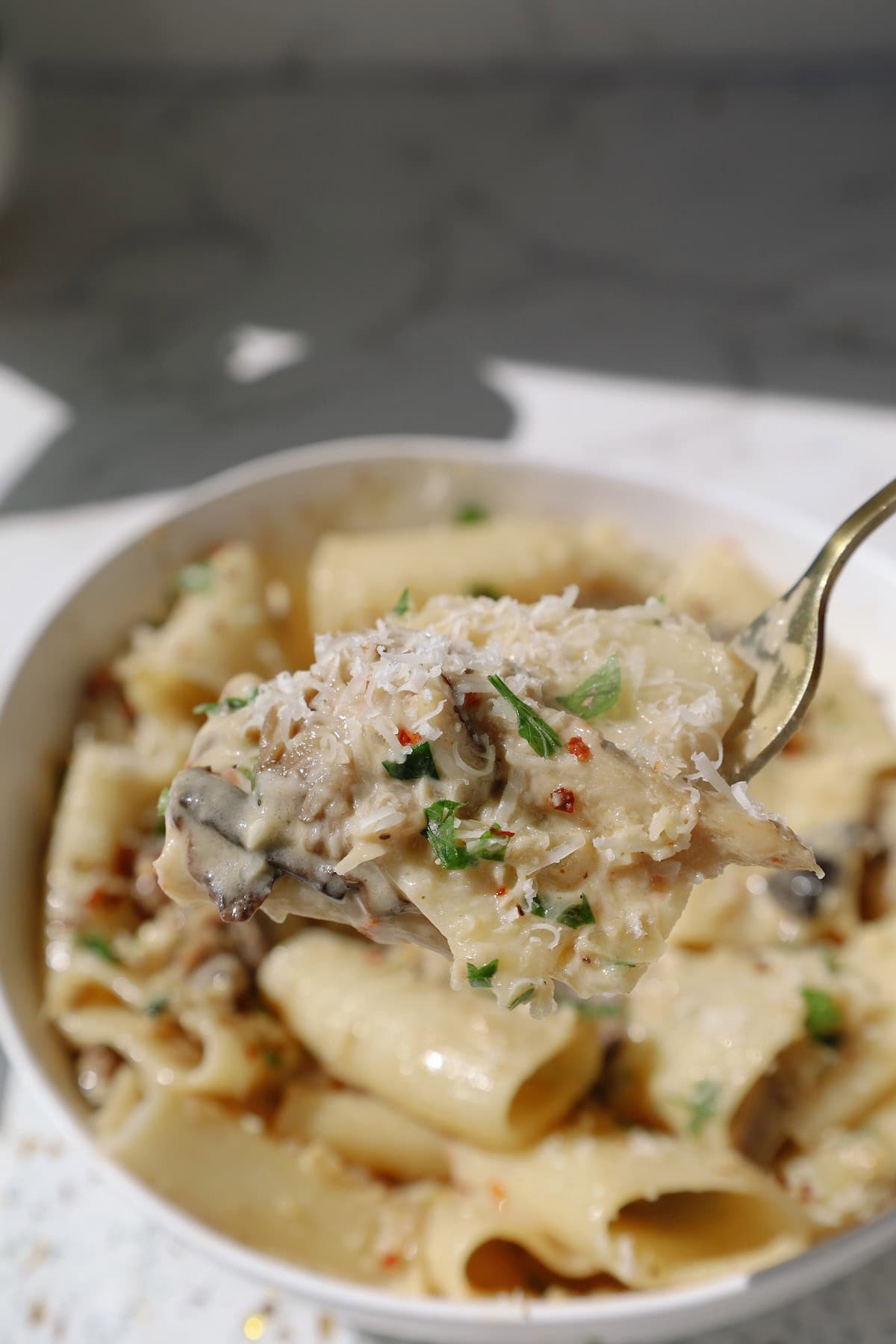
Key Ingredients for my Mushroom Miso Pasta
Gourmet mushroom blend: Mushrooms are the heart of this recipe. A mix of shiitake, oyster, and cremini adds depth and texture. Their earthy flavor pairs beautifully with miso’s savory punch.
Shallot and garlic: The flavor base. Shallots add a gentle sweetness, while garlic keeps things bold and aromatic.
Red chili flakes: For a subtle kick of heat that cuts through the richness.
Fresh rosemary and thyme (optional): Herbs bring a woodsy balance to the creamy sauce, though you can skip them for a more streamlined version.
White miso paste: The star ingredient. It adds a salty, umami-rich depth that transforms this from a basic cream pasta into something layered and complex.
Soy sauce: Just a splash for extra umami—it enhances the miso without making the dish overly salty.
Heavy cream + parmesan: These create the luscious, silky sauce that clings to the pasta. Parmesan adds nutty depth, while cream makes it indulgent.
Butter: Swirled in at the end, it gives the sauce that glossy, restaurant-worthy finish.
Pasta water: The secret weapon for emulsifying everything together into a silky sauce.
Pasta (5–6 ounces): Bucatini, spaghetti, or fettuccine are perfect here because they soak up the sauce.
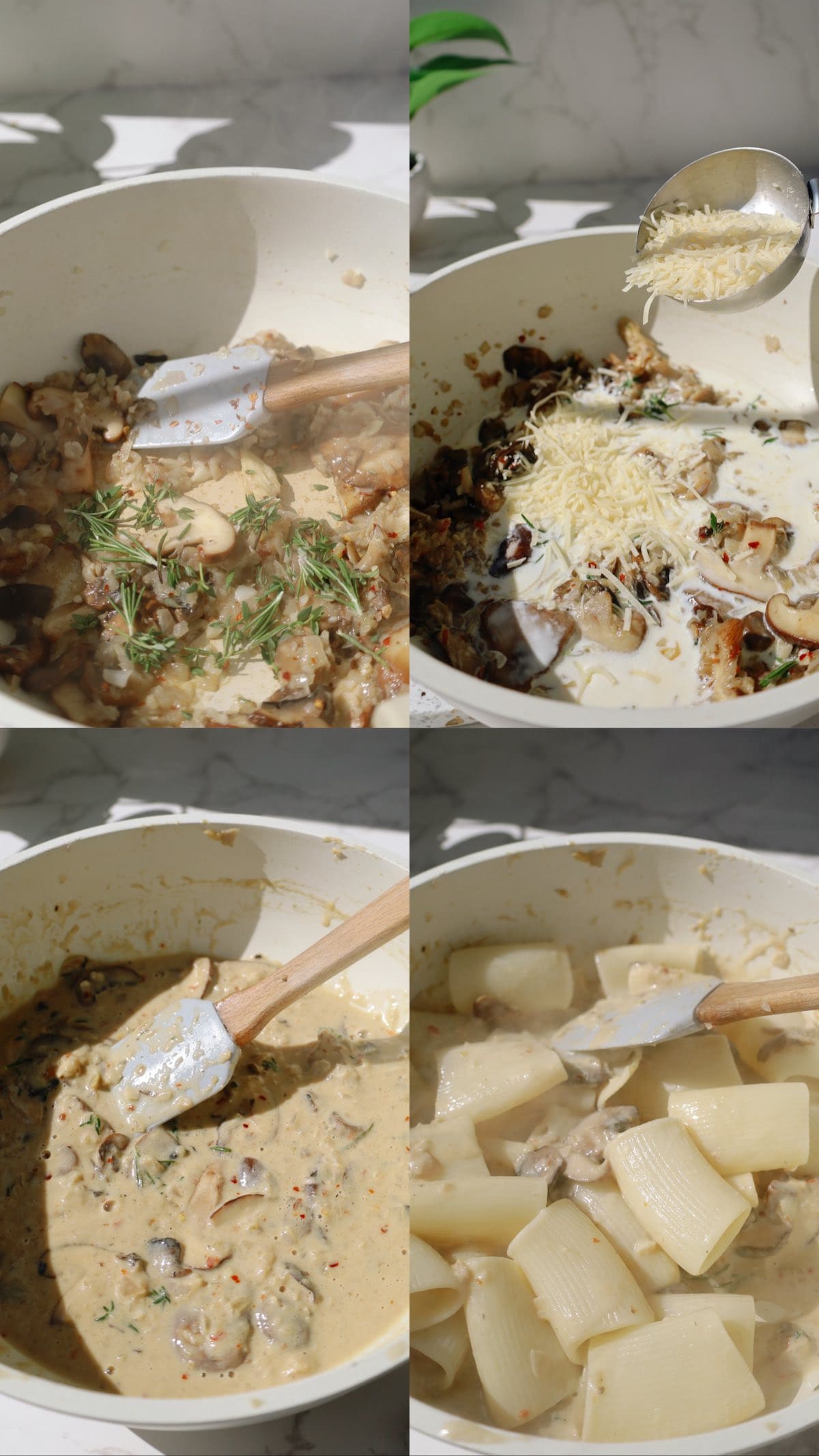
How to Make Mushroom Miso Pasta
- Cook pasta until al dente, reserving pasta water.
- Sauté mushrooms, shallots, and garlic in olive oil until golden.
- Add chili flakes, herbs, and a splash of pasta water.
- Stir in cream, parmesan, miso, soy sauce, and pepper.
- Toss pasta with sauce, adding more pasta water as needed.
- Finish with butter, garnish with parsley, chili flakes, and extra parmesan.
Common Mistakes to Avoid + Pro Tips
Don’t burn the garlic: Always add a splash of pasta water or lower the heat when sautéing—burnt garlic will make the sauce bitter.
Avoid too much miso: A little goes a long way. Stick with white miso for balance; red miso would overpower the dish.
Don’t skip pasta water: It’s key for emulsifying the sauce so it coats evenly.
Taste before salting: Between miso, soy sauce, and parmesan, you may not need extra salt.
Use freshly grated parmesan: Pre-grated cheese doesn’t melt as smoothly.
Serving Suggestions
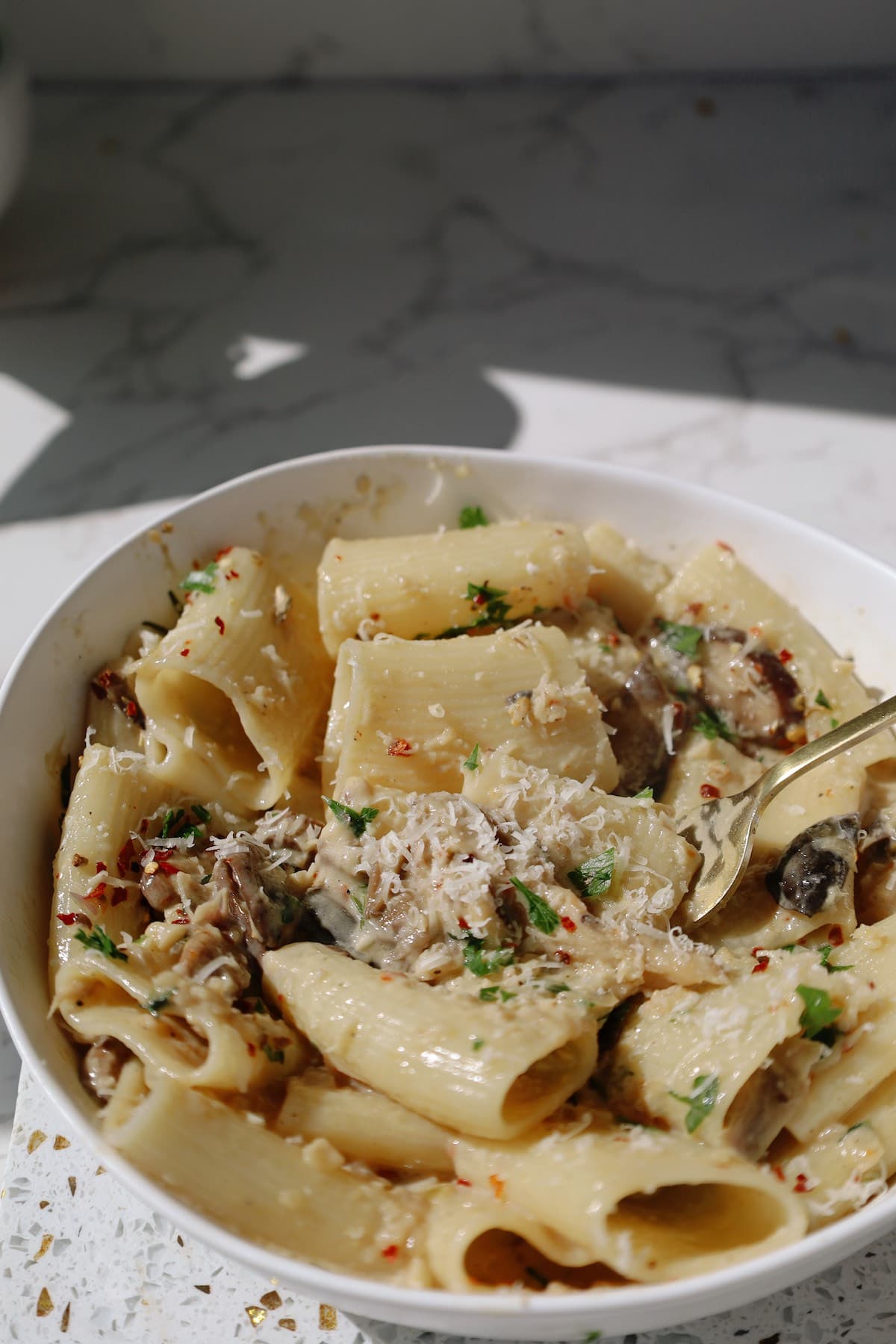
There are so many wonderful dishes that pair well with this rich mushroom miso pasta so I wanted to share some of my favorites. For something light and colorful on the side, my Honey Roasted Carrots with Whipped Feta or Air Fryer Green Beans add the perfect contrast. Both balance the creamy sauce with a little freshness and texture.
If you’re planning a full spread, finish things off with a cozy dessert. My Masala Chai Tiramisu brings warm spice and creaminess that pairs beautifully with the earthy miso, while a scoop of ice cream drizzled with my Two-Ingredient Chocolate Ganache is simple but feels instantly fancy.
Or go for something bright and elegant — my Pistachio White Chocolate Cookies or Lemon Posset make the perfect sweet finish to round out the meal.
FAQ
Miso adds depth, saltiness, and umami to the sauce. It balances the richness of cream and cheese while making the dish taste more complex.
Yes! Swap the cream for half-and-half or even full-fat oat milk for a lighter version. The miso and parmesan will still make the sauce flavorful.
Mushroom Miso Pasta (Ultra Rich and Creamy!)
Ingredients
- 6 oz gourmet mushroom blend
- 2 tbsp olive oil
- ½ cup shallot, finely chopped
- 1 tbsp garlic, chopped
- ½ tsp red chili flakes
- 1 tsp fresh rosemary , optional
- 1 tsp fresh thyme, optional
- 1/3 – 1/2 cup heavy cream
- ½ cup grated Parmesan
- Black pepper, to taste
- ¼ cup reserved pasta water
- 1 tbsp white miso paste
- 1 tsp soy sauce
- 2 tbsp butter, stirred in at the end
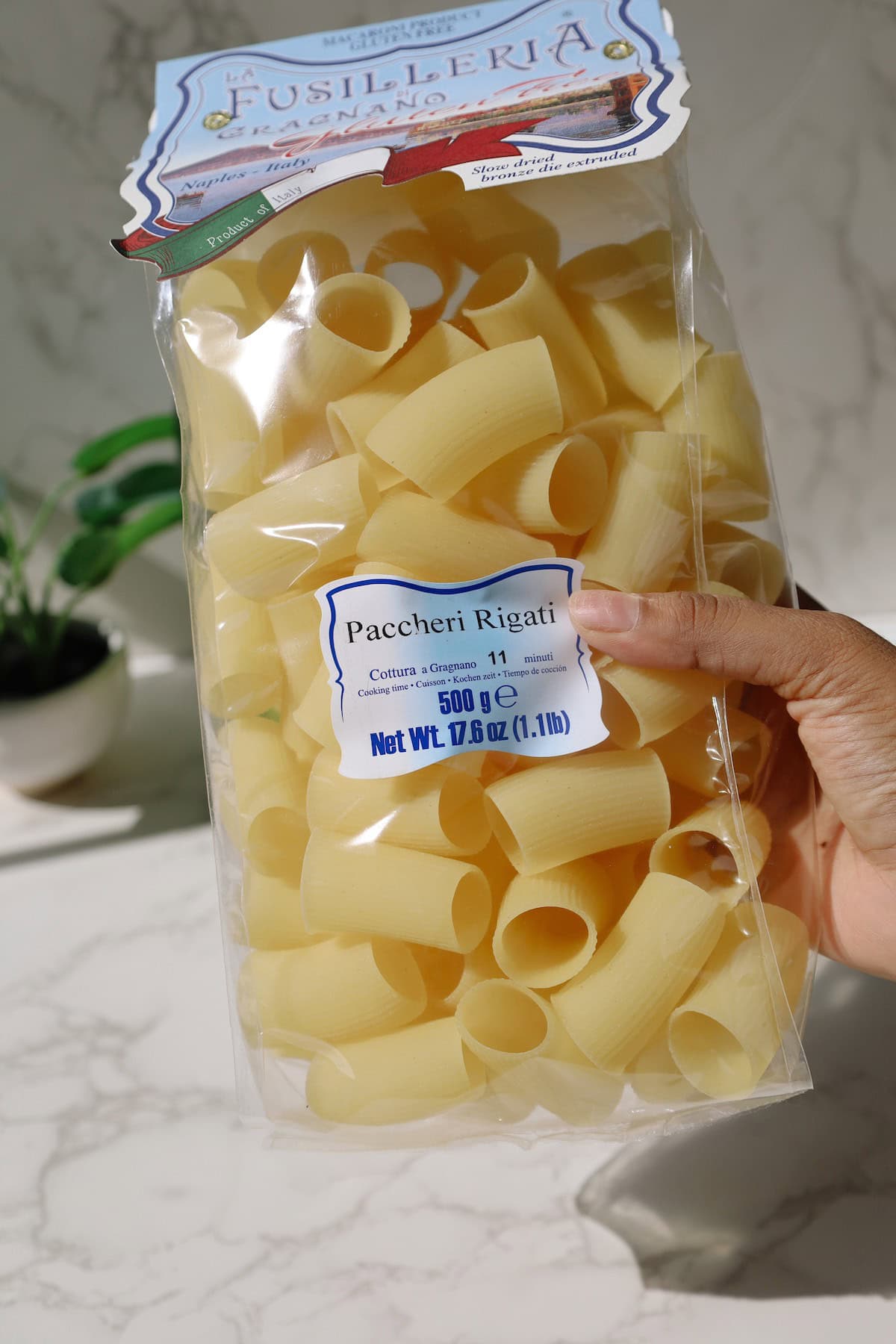
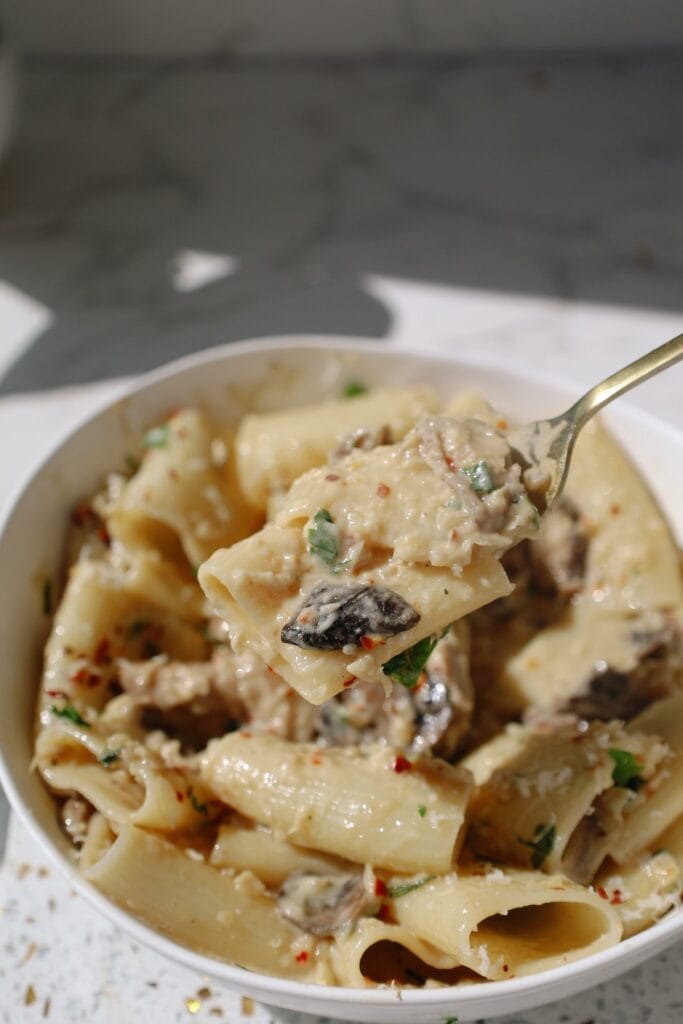
- 5-6 ounces pasta, I used paccheri rigati
- To garnish:
Garnish
- extra parmesan
- chopped parsley
- chili flakes
Instructions
- Cook pasta: Boil 5–6 ounces of pasta in salted water until al dente. Reserve at a 1/4 cup of pasta water.
- Sauté aromatics: In a large skillet, heat olive oil over medium heat. Add mushrooms and cook until they release moisture and turn golden brown. Stir in shallot and garlic, cooking until fragrant.
- Add seasoning: Mix in red chili flakes and optional herbs. Deglaze with a splash of pasta water to prevent garlic from burning.
- Build the sauce: Pour in the heavy cream and stir until warmed through. Add parmesan, miso paste, soy sauce, and black pepper. Whisk gently to emulsify into a creamy sauce.
- Combine pasta and sauce: Toss the cooked pasta into the skillet, adding reserved pasta water as needed to loosen and coat every strand.
- Finish with butter: Stir in butter for a glossy finish. Taste and adjust seasoning.
- Garnish: Top with parsley, chili flakes, and extra parmesan before serving.
Notes
Nutrition
Nutrition information is automatically calculated, so should only be used as an approximation.